ALBANY, N.Y. - High schoolers can be cruel. They mock you for wearing a winter coat with a strip of fur around the hood, even though you're a Korean exchange student.
That's why Dong needed a new coat this evening. He wanted to stop the torment of his classmates, who are obsessed with tearing down anyone who might have a different sense of style.
His host father explained the situation. Short and stocky as his guest is tall and thin, the host spoke English with a clipped Brooklyn accent straight out of the Saturday Night Live "Two A-Holes" sketches.
"Dong needs a new coat. The kids at school. [Pause] Are making fun of him."
They started trying on new jackets, mostly the North Face ones that are standard attire in richer local high schools and most four-year colleges. He put on the Denali Fleece, a $165 coat that sells buckets year after year. Then he tried on a large down jacket which is sold by local sporting goods stores and "urban clothiers" appealing to the hip-hop crowd. The host father put Dong in a size Large, which rested on his small frame like a barrel on a naked man.I suggested a size Small might fit better. They protested, and we settled on a medium.
With Dong throwing on hunting vests, hooded sweatshirts and ski parkas with the North Face logo, I noticed that Dong cared about his dress. He wore torn and purposely faded jeans, a zip sweater with a popular Asian fashion line on the front a designer T-shirt underneath. He dressed like a typical Korean teenager.
We didn't have Dong's size in the jacket, so I put one on hold in another store. When I returned I found Dong & Host in party trick mode.
"Dong, show the man a Half-Asian person."
Dong used his hand to stretch out his left eyelid.
"He's such a joker! Now show him your karate moves."
Dong lowered his knees and bent his elbows upward at a 90 angle, like Bruce Lee. Never mind that karate is a Japanese art, and Dong probably studied a different one in Korea: this was a cultural exchange, and Dong must find a way to fit in America, just like everyone else.

Sunday, December 31, 2006
Dong

Sunday, December 24, 2006
New Hoodie Source
 ALBANY, N.Y. - His hooded sweatshirt had my area code on it, so I asked him to tell me about it.
Turns out Jesse designed and silk-screened the hoodie at his own design shop, 518Prints. I checked out their Web site after work and it's a pretty professional operation. The difference between this site and others I've encountered is this business is a full-time job.
According to Jesse, who I met near a stack of Nalgene bottles, 518Prints bread and butter is selling merchandise to bands. They make up shirts and hats and mail boxes to different tour stops. This way the band always has a fresh supplies of buttons to sell to new converts, and doesn't have to haul 5,000 shirts from Portland to Seattle.
With the Eggcellent business on hiatus - or at least hibernation - as its founder attends college, this could be my new source for Albany-related T-shirts.
I owe Jesse one. He spent $425 on mountaineering equipment and a really fancy jacket.
Now I just need to coin the next Albany shirt sensation. Perhaps "Spitzer: Bringing Baldness Back" or "I'd Rather Be At X-Gates" shirt.
Friday, December 22, 2006
Precious Gifts
 ALBANY, N.Y. - Every so often, there's something that jolts you out of the endless stream of holiday shoppers purchasing last minute coats, skis and Nalgene bottles.
Today's interruption was a 34-year-old woman with shoulder length curly hair and a pilly black peacoat. She placed a year-old pair of long underwear on the table and said she wanted to exchange the size.
"I got married this year," she said. "When you get married everything just goes on hold."
While she picked out a new size, I searched the computer for the garment's coat. Without a receipt, the woman would receive the current price of the bottoms. She was very lucky; normally last year's models are put on clearance and eventually marked down to 99 cents. Instead this model was still in stock and at a higher price. The woman got a $9 credit in addition to the trade. I rang up the transaction and placed the cash on the table.
The woman looked confused by her windfall. She stumbled for a minute, and then said she had another transaction: She wanted a $15 gift card. Fifteen dollars is an unusual amount for the store; it's the smallest one I've made this year. Even more strangely, the woman requested that I take the $9 and place it toward the certificate. She paid the rest of the total - six dollars - by check.
"I don't have much money," she said, and I took it the reason why she divided up such a small amount.
On the gif certificate, she filled out the subject line "Paul's Gift" and circled a Bible verse on her check, something from the Gospel of John. I placed the check in the register and gave the woman her receipt.
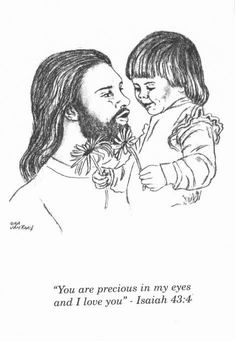
"Thank you very much," she said, and then took a small, salmon colored business card that she'd been holding in her hands and pressed it into mine. After she left, I turned it over. It was another Bible quote, Isiah 43:4. "You are precious in God's eyes..."
This gesture moved me. I may not share this woman's passion for religion, but her actions were pure. That she'd give me this small card, with no sermon or attempt at conversation, is wonderful. I felt the same way earlier this year when a woman handed me a red "Support Our Troops" wristband at a gathering for a group of soldiers en route to Iraq. I treasure these objects, because of the people who gave them to me.
Sunday, November 26, 2006
Flat Box
 ALBANY, N.Y. - What will it take to get cups and bowls back onto American hiking trails?
Utensils and silverware have been under attack in the hiking world for some time now. While Thoreau traveled to Walden Pond with a set of knives and stew pot, experts today recommend the long distance hiker travel with just a metal bowl. Minimalists eat freeze dried food and drink coffee out of the same bowl.
While the few ounces might help on day six of a week-long trek through the Rockies, it makes the trip a less uncivilized. Enter Orkiaso, the flat plastic sheets that fold into leak-proof cups, bowls and plates within a minute.
I first saw these at Eastern Mountain Sports, where I'm putting in a few extra shifts for the holidays (Holidays to Russia don't fund themselves). EMS is giving the item a large display in the campware section of the store.
This clever innovation comes not from the land of the tatami but fussy old England. Three recent university grads took spacial-visual skills and a clever marketing strategy and turned it into one of the year's hottest inventions. It's now available - according to the product's Web site - on six continents, although who exactly in Africa is begging for flat bowls for hiking trips I'm not sure.
You won't find it mentioned on their Web site, butorkiaso means "folded plastic" in Japanese, and is a form of origami. It can't be considered true origami, because the sheets used to make the items have been cut into non-square shapes. But this invention shows that the one or two days devoted to teaching American children how to make a paper sailboat (or if you're lucky enough to have a Japanese exchange student, a crane) might not be a complete waste of time.
(On the subject of Eastern folding traditions, I wanted to point out that the Russian nesting doll, or matrioshka, isn't really Russian. The first ones of these dolls-within-dolls that every person brings back from Moscow were made in 1891, as a copy of an older Japanese style. The Japanese dolls in turn evolved from Chinese Boxes, the fount of thing-inside-a-smaller-thing worldwide.)
Orkiaso is manufactured in Shenzhen, near Hong Kong. This means that it took Brits, Russians, and Japanese to modify a Chinese invention, which is now made in China and sold to Americans and Africans at inflated prices. Imperialism is not dead.


