ULAANBASHI, Mongolia – Hollywood scared the shit out of the Soviet censors. Very, very few films were allowed to pass the Iron Curtain, and nothing in John Wayne's canon was on that list. The quintessentially American westerns – "High Noon" and "The Quick and The Dead" – never screened in Warsaw or Moscow. Instead the proletariat a revisionist take on the genre: the Red Western.
As with their American brethren, the Red Westerns are a diffuse group, but in general these movies subverted and questioned the Western's moral compass. Many times the Native Americans are shown to be heroes, and the maundering cowboy an enemy. Instead of making off with a pile of money, the Red Western hero distributes it amongst the people.
With these plotlines, the Soviet Film Agency couldn't just call up the National Park Service and request a three-week shoot in Monument Valley. The Red Westerns had to use stand-ins for the scenery of the American West, and by far the most popular alternative was here in Mongolia.
After a long drive back to Ulaanbaatar today, I realize that the directors needed to alter very little to make the shooting location seem American. Our route from Kharkorum is more southerly than the one we took out, which means we are much closer to the Gobi Desert. Soon after leaving, the terrain goes from light brown to a deep rust. Rolling hills are replaced with strange rock formations dropped randomly in the plains. The steppe winds have blown oblong curves into the rock. This could be Colorado or Arizona.
Bobby is apparently not desperate to get back to Ulaanbaatar. Three hours into our trip, six rotations into Battir's new tape – a collection of Buddhist mantras acquired at the Kharkorum Gift Shop – she asks if we are up for one last tourist attraction. "Do you want to see dunes?" she says, and half-hour later the van is parked on the top of a small hill of sand.
Although they lobbied for the stop, Myriam, Cing and Bobby decide the biting wind is too much and just take a few steps out of the van. Caleb and I plunge into the wilderness. Here there are no trees and no grasses, just sand and a few scattered pieces of scrub brush. I run toward a high dune, a couple hundred meters from the van, scamper to the summit and then jump off the sharpest face.
Thud! I land not in a cushion of buoyant sand but on a patch of crusty sand hard as cement. My knees scream in pain. I have been the victim of a mirage. The toffee dunes and blinding sunlight so much resembled the Southwest for a brief moment, I deluded myself into believe I was in a real desert. I hobble back to the car, cursing not to make the same mistake again.
Perhaps it is lingering skepticism from the fall or the combined effect of four nights of questionable sleep and hard drinking, but I am slow to realize the other Western parallels as we pull off the road for lunch. We stop in the first settlement since our ger the previous night, five bumpy hours from Kharkorum.
Our destination is a canteen smack dab in the middle of a one-street town. Inside a young waitress, bland expression practically bursting with ennui, moves her hand to indicate open seating. We choose the only table big enough to accommodate a party of six. The menu sticks to familiar favorites: noodles with mutton, mutton soup, fried mutton rice and buuz, which are mutton-filled dumplings. On the walls is a collection of crap that looks pulled out of someone's storage closet: yellowed surveryor's maps, a brochure for a ger camp, a couple family photos and a wool hat. This is an old time saloon, a watering hole for grizzled locals (two old herders sit at the table opposite ours, sipping milk tea) and travelers passing through.
Hunger abated, I am able to examine the rest of the town with a clear mind. The dozen or so structures in this town are all on the same side of the street, built so they connect in one long row. They are each the same heigh, with matching shutters and all made out of wood. Each building is seperated by a different bright paint color, either a coral blue, fiery orange or magenta. This place is a couple tumbleweeds and a hero short of being a Sergio Leone film set.
Too soon I am in the backseat of the van, speeding back towards civilization. Mongolia is true the Wild West. Here there is no need to remember a time when the place wasn't "tame." We still cut our own path, choosing where to explore in a virgin land. Authority is far away; no one is coming to rescue the idiotic adventurer. It is a place where people still live as they please, mostly unfettered by the pressures of the information age. I will miss it.

Thursday, January 31, 2008
The Wild, Wild West

Tuesday, October 10, 2006
Adventures in Post Industrial America
 GARY, Ind. - I'm hungry. I want lunch.
I pulled off Route 90 at this city of 100,000. The name sticks out in my mind, not for any one particular event but as a archetypal Midwestern city. I wanted a sandwich and a slice of Americana.
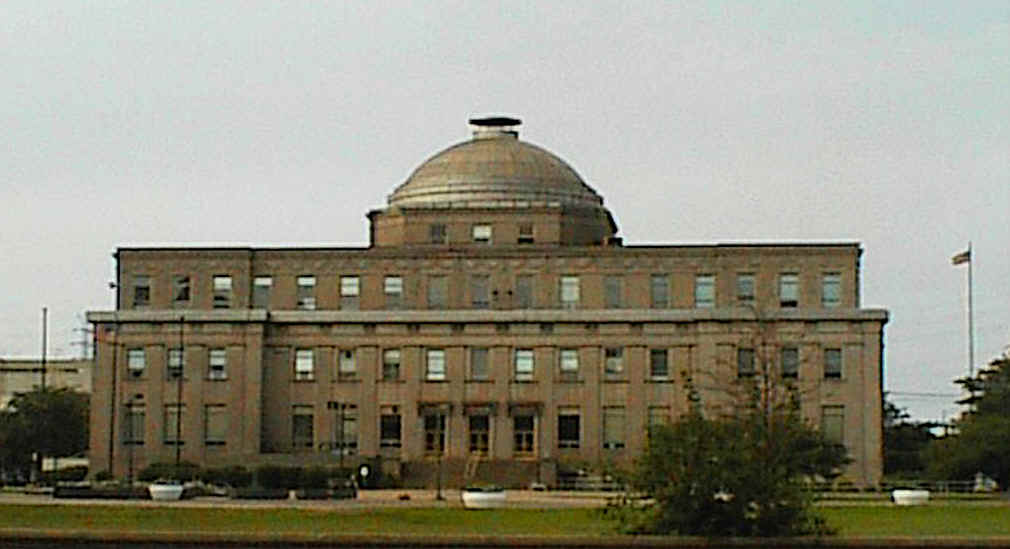
I got off at the Broadway exit, because Broadway is always at the center of the city. Turning right, city hall and the local court building were in directly ahead. They were both imposing 19th century buildings, now a dark shade of brown from age. I turned on the street next to the courthouse, incorrectly assuming it would lead to an area of restaurants and little cafés. Instead the city ended after just two blocks, replaced by a winding two-lane road and small post-war homes.
"Tammy's Ice Cream Store. Now Open." read a large sign. As I passed the building, there was a much smaller sign on the building. It said "Closed."
I came to a baseball stadium, U.S. Steel Stadium. There wasn't a game today, and the idea of cheering for a mascot as strange as steel seemed prosperous, especially at a time when commodity prices are sagging.
There were no restaurants. There were no cafes.
I saw a gas station on the right side of the road. Unleaded was $2.09 a gallon, the best I'd seen in a while. I pulled in. A homeless man walked in circles in the parking lot, glaring at people pumping gas.
"Toxic Waste Clean Up To Cost $35 Million," the local paper headline read, taking up the entire front half of the newspaper. A man in a wheelchair rolled over to the country. "I want a Butterfinger bar," he said, fishing through a plastic and Velcro wallet for $1.
I went in the bathroom. It was disgusting, a clogged toilet and a sink full of grout. When I returned, the man in the wheelchair was still asking the Butterfinger bar.
I wondered if there was any reason I should stay in this depressed steel town.
Michael Jackson is from Gary, Indiana.
I'm getting out here. Without lunch.

