ALBANY, N.Y. - One fallacy that continues to persist is that when I'm home, I'll catch up on my e-mail. Before arriving here in Albany, I imagined myself typing away at the computer, returning unanswered dispatches from March and reconnecting with lost friends. In reality, you're much more likely to receive a note from me originating in Indiana or France than Albany or Boston.
But tonight, with an extra hour due to daylight savings time, I started an e-mail to a friend in Australia, last seen in Zhengzhou. I decided to write to him because in addition to having an unanswered e-mail, I'm also reading a book that takes place in his current town of Alice Springs.
The book is "The Songlines" by Bruce Chatwin, and tells the author's quest to find the meaning of indigenous songs, and more deeply, trying to find a connection between nomadic peoples around the world. It's an ambitious, mostly non-fiction account of a lengthy visit to the area in the late 1980s. The text is fascinating, as it runs from encounters with Russian castaways and priests on the lam. The book makes me pine for a visit to Alice Springs, a desert settlement of 28,000 over a thousand miles from a major city.
I hesitated to mention this in the e-mail, as it seems too obvious. Surely my friend has heard of the travel book largely set in his hometown? A book that is taught in universities, has been awarded several prizes and is considered a masterpiece by important literary critics?
Albany has one famous work of fiction: "Ironweed." The William J. Kennedy book chronicles a down-on-his-luck man's return to his hometown during the final years of the Great Depression. I should say it apparently does, because I've never read the book. I heard of it growing up, but its setting in Albany never made me want to pick it up. I remember it now because in my travels, when people (usually educated people) find out I'm from Albany, they'll ask me if I've read "Ironweed."
So maybe The Songlines isn't being read in Alice Springs after all.

Saturday, October 28, 2006
Hometown Prose

Tuesday, October 24, 2006
Marie
ALBANY, N.Y. - The "Marie Antoinette" teaser is one of the best. Kristen Dunst runs around Versailles, playing with sparklers and dashing through gardens in the pre-dawn like a teenager on prom night. The montage is set to New Order's "Age of Content," a mix of fast guitar and mournful synths which is now one of my iPod's most played songs. I loved it, and so did several of my friends.
We counted down the moments until "Marie Antoinette" opened in theaters. We cringed when we heard reports that some bbooed the film at Cannes. Roger Ebert said it was just a couple people, and the French like to boo films anyway, we said. We were a tad baffled when a second trailer was released, with more running around Versailles but this time with the god-awful Strokes in the background. We wondered when the reviews were very mixed.
Finally, we got to see the movie.
Sadly, it wasn't great. The plot wanders, and even a wonderful soundtrack of ambient and new wave music (that Strokes song excluded) can't make up for a lack of resolution. The movie's more a mood piece than anything else.
Last week in Scranton, my friend Nazy told me, "prepare to be disappointed," and I was.
If the movie didn't quite work, there were still many scenes that brought out the same feelings of young restlessness that made Sofia Coppola's last film "Lost in Translation," a touchstone for many of my friends. We identified with both the heroine and Bill Murray's character, the uncertainty of what to do with life and also the perils of what can happen if we choose incorrectly.
And that was worth the price of admission.
Friday, October 20, 2006
A Local Tabloid Worth Reading
NEW YORK - One thing I absolutely love about New York (and Madison and Chicago): The Onion in print.
Reading the stories online, without many of the graphics and local content can't compare. Long live New York.
Tuesday, October 10, 2006
Adventures in Post Industrial America
 GARY, Ind. - I'm hungry. I want lunch.
I pulled off Route 90 at this city of 100,000. The name sticks out in my mind, not for any one particular event but as a archetypal Midwestern city. I wanted a sandwich and a slice of Americana.
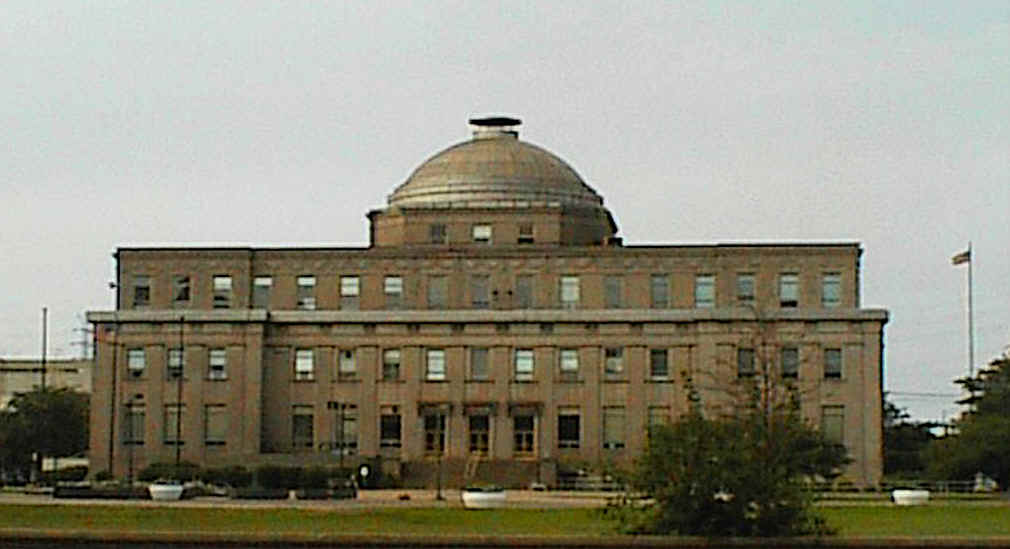
I got off at the Broadway exit, because Broadway is always at the center of the city. Turning right, city hall and the local court building were in directly ahead. They were both imposing 19th century buildings, now a dark shade of brown from age. I turned on the street next to the courthouse, incorrectly assuming it would lead to an area of restaurants and little cafés. Instead the city ended after just two blocks, replaced by a winding two-lane road and small post-war homes.
"Tammy's Ice Cream Store. Now Open." read a large sign. As I passed the building, there was a much smaller sign on the building. It said "Closed."
I came to a baseball stadium, U.S. Steel Stadium. There wasn't a game today, and the idea of cheering for a mascot as strange as steel seemed prosperous, especially at a time when commodity prices are sagging.
There were no restaurants. There were no cafes.
I saw a gas station on the right side of the road. Unleaded was $2.09 a gallon, the best I'd seen in a while. I pulled in. A homeless man walked in circles in the parking lot, glaring at people pumping gas.
"Toxic Waste Clean Up To Cost $35 Million," the local paper headline read, taking up the entire front half of the newspaper. A man in a wheelchair rolled over to the country. "I want a Butterfinger bar," he said, fishing through a plastic and Velcro wallet for $1.
I went in the bathroom. It was disgusting, a clogged toilet and a sink full of grout. When I returned, the man in the wheelchair was still asking the Butterfinger bar.
I wondered if there was any reason I should stay in this depressed steel town.
Michael Jackson is from Gary, Indiana.
I'm getting out here. Without lunch.
Monday, October 02, 2006
Drove to Chicago
CHICAGO – This blog has had two interruptions of more than a couple days since its inspection this past spring. Both times when I've reappeared it's been here.
The reason is traveling, and the stresses and illnesses that seem to come when one does it. Rest assured I'm feeling better at the moment and will be lingering my way back home. Maybe it'll take three days, maybe three weeks, but I hope either way I'll be blogging about it. 
Friday, September 22, 2006
Tube

WICHITA, Kan. – I'm glad I don't work for TV.
I'm glad I don't work for TV because I didn't have to spend 17 hours outside a home in Southwest Wichita yesterday and today. I only had to spend five, including a break for a drink.
I'm glad I don't work for TV because I don't have to do live updates all the time. I also don't have to send video back to the office, or learn how to operate a large truck. Or sometimes shoot my own video and begin editing it.
I'm glad I don't work for TV because I don't have to look good every day. When you start early, you tend to dress right before you head out the door. But in TV land, that means you could be on the air in 30 minutes. Or you might need to go live 12 hours after arriving at the office. You need to get the story, and also look good doing it. Judging back the quick shot of me on camera this afternoon, I'm ready for neither.
I'm glad I don't work for TV because I don't have to look for visuals to accompany my story. A quick photograph is enough. I don't have to worry about getting enough still shots, background images, on-camera interviews and action to fill a three minute segment.
I'm glad I don't work for TV because I can do my job anywhere. All I need is a notebook (which fits nicely in my back pocket) and a pen (two pens actually, in case the first runs dry). I don't have a "crew" or need to plug in here or there.
Television is so complicated. I'm glad I don't work there.
Related:"The Capture of Jiang Zhendong"
Thursday, September 21, 2006
Everybody Down
WICHITA, Kan. – Tornadoes can really mess up a work day.
This afternoon there was a tornado warning.
A supercell thunderstorm formed in the southern suburb of Haysville, and raced toward downtown Wichita. A police officer spotted a funnel cloud – the tight formation that immediately proceeds a touchdown – and the warning was issued.
Meanwhile at the crime desk, I was furiously typing a story about a state agent being assaulted at a smoke shop and then chasing the suspect through North Wichita. Suddenly the entire newsroom stopped working, huddled around the two small televisions and began talking tornado.
"Has it touched down yet?" "Which way is it headed?" "How long is the warning for?"
They talked, and gossiped. Meanwhile I was listening to live weather reports from the Internet, television and radio, trying to get a handle on the situation.
Then an editor came up to me and said, "If they ask you to go downstairs, don't go. Just go over there for a minute or something."
Fair enough. A crime reporter needs to stay on scene in case of an emergency, to report to the public. Even if that means going for a short ride in a tornado. I started typing away: then he was dragged for several blocks near the area of 21st and Grove....
A custodian appeared and shouted, "Everyone. Get to the basement – now!"
Most people did what they were told, shuffling down to the stairs to take shelter. I stayed back. Out of the corner my eye I caught my editor, heading down the door presumably to the basement.
So much for staying the course.
(Postscript:Obviously, the Eagle didn't get blown over by a tornado. The cell didn't even touch down. There's always next week.)
Monday, September 18, 2006
The White Elephant in the Newsroom
WICHITA, Kan. – Today marks the end of an era. Dennis Rader, the BTK Strangler, has agreed not to appeal his conviction in 10 killings during the 1970s and 1980s.
Rader is Wichita's most famous citizen – certainly more people have heard of him than Wyatt Erapp or Kristie Alley (who recently bought property here). His string of murders were terrifying. He stalked young women for weeks and then killed them in their homes. His crime spree went unsolved for years, and generations of young women here didn't know if they would be the next victim.
BTK was captured in 2004 after a dramatic reappearance. He turned out to be Rader, a respectable citizen in nearby Park City. He had a Boy Scout troop. He attended church. Many he came back because he had more time with his children finishing high school.
I knew the basic outline of the case before I arrived here. What I didn't realize was the central role the Eagle played in the drama. Many letters and notices were addressed to the Eagle.
Some of the paper's most talented writers haven't been available this summer because they're busy writing a book on BTK. Their deadline is steadily approaching – October 1 for the final manuscript – and it doesn't seem like the right to ask them to sit back and reminisce. The book, after all, will be available next spring.
Slowly though, stories have trickled out. About the time CNN gave several interviews from the desk where I now sit. The psychic who came here to film a British documentary to crack the case.
I interviewed BTK's pastor for an unrelated story about a missing dog (Don't laugh: that story ran on the front page).
BTK was the biggest story ever to come out of WIchita. It is the biggest story most people in the newsroom will ever cover. It's hard to imagine the newsroom when it was so consumed with this one giant story – terrifying and compelling in equal measure. It's not something I've ever seen in a newsroom, and it's not something I'll necessarily ever see, either. The closest I can get is the occasional stories from the people who worked the case.
When a reporter confirmed the news that Rader is not appealing, a strange mood came over the Crime & Safety section of the newsroom where I now sit.
"This is it, isn't it?" I said.
"Yes, I hope so," a reporter said. "He was a terrible, terrible person."
He still is.
Friday, September 15, 2006
A Long Midwestern Goodbye
WICHITA, Kan. – Mostly Red is beginning the transition to another geographic location. In just two weeks, I'm going to leaving wonderfully flat Kansas for the sights and sounds of my hometown of Albany, New York.
I've been regularly blogging for about five months now, and I've yet to file a dispatch from my hometown. Soon that should all change. I'm looking forward to offering my perspective on the city I know the best, sharing memories and also new experiences in the Empire State.
So don't be surprised if the next two weeks bring more reflective entries and less reactions to the day to day of my life. There are certain topics which have been on the back burner, in a pile of things that I want to cover while in Kansas. With time running out, hopefully I'll actually write about these before it's too late. And perhaps talk a little more about QuikTrip.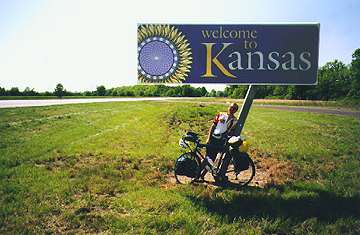
Wednesday, September 13, 2006
Great White Fair
 HUTCHINSON, Kan. – On stage was a hypnotist, doing one of those shows where he attempts to make ordinary people lose their inhibitions and cluck like a chicken in public.
"You won't believe what these people will do!" he said.
I scanned the crowd, skeptical. Could these people really let go? I'm pretty sure they could: I saw several of these acts in college. What concerned me a little bit more was the crowd at the Kansas State Fairgrounds: 600 people in this audience, and not a recognizable minority in sight.
To say the fair was very white would be an understatement. This fair could have been the site of auditions for a movie on the Third Reich.
Kansas is a diverse state these days. I spend my lunch breaks switching between authentic tortas, wonderful pho and sometimes passable Chinese food. Minority business ownership is increasing, and people are drawn to the industrial and service jobs locally. What it seems they can't be drawn to, is the state's celebration of its agricultural past.
I went to the fair on a rare day off from the newspaper (I'm scheduled to return on Saturday as part of an assignment, but things wouldn't the same on deadline), expecting to get yet another peak into Kansas life. What I found was an odd fact about the state in 2006: a state where people honor traditions, but only those with a tangible connection to these traditions.
Many of the people at the fair weren't farmers, but had a connection to the field. "My father was a farmer in Dodge City," was a common refrain. This ensures a healthy crowd – attendance was up 10% over last year – but not necessarily a diverse one. I struggled to see more than two or three minorities at the fair, with the obvious exception of Native Americans peddling crap "Western" merchandise.
To be relevant, the fair needs to step outside of its traditional audience. There needs to be more an effort to include the histories and traditions of some of the more recent arrivals to the United States. One shouldn't need to have been in Kansas for eight generations to feel welcome at this great assembly. The New York State Fair, while not perfect, has exhibits on African, Asian and Native American history and culture. There's fun, food and assembly – the same as any other fair. People welcome these exhibits and they're an important part of the audience. If the Kansas fair wants to ensure their future, they'd be wise to do the same.
Monday, September 11, 2006
How to Ace that Interview
WICHITA, Kan. – At the end of the interview, a source sometimes will say as a form of salutation, "Don't make me look bad!"
There's a paranoia that our time together was only for me to gather ammunition to earn my salary and make people look stupid. If only they knew the lengths that many other journalists and I go through in order not to embarrass people.
So far this summer I've omitted juicy but not tactful quotes from sources informing me that "all politicians are crooks," "birds are sacred creatures of nature" and more than one reference to "those Asian people." People I interview – "sources" in journalist speak – are usually nervous when I begin asking questions. Then pause, restate what they've already said, and sometimes give short responses. Then, after about five minutes, they seem to forget that I'm standing three feet from them scribbling down everything they say.
I struggle with these notes when I return to the office. Is my job as a reporter to give the objective truth – even if that means portraying someone in a less than pleasant light? I think the answer is no – most of the time. Since most people are only going to be quoted once or twice in the article, I usually go for a statement that gets at the heart of what they are trying to express. Sometimes I'll supplement that with a particularly insightful or funny comment, but rarely a rude one. People read the paper to be informed. It shouldn't be a place where they can get a few laughs because someone has no tact.
That being said, sometimes it wouldn't be ethical to not report a comment. If I was interviewing Mel Gibson and he said something anti-Semitic, that would have to go in the paper. The same with most politicians if they said something over the line. With people in public office or positions of authority, I'm much less likely to hold a comment because I believe they don't realize how their comments might be observed. These are generally skewered people, who know what they are saying when it comes out of their mouth.
The moral of this little tale is next time you're being interviewed by me or another reporter, take a deep breath before you answer each question. Trust me, I really don't want to have to make you look bad.
Sunday, September 10, 2006
Parking Lot Pimpin'
WICHITA, Kan. – For me, an ideal Saturday would be dinner at a trendy restaurant, a drink at a fun bar, a few more at a good club and then some greasy late night snack before crashing at an ungodly hour of the morning. For some people in Wichita, it's a trip to an empty piece of pavement, where they pop their hood, roll down the window and blast some music.
I live across the street (different street than the recent armed robbery) from Kansas' largest flea market. Two days a week, this lot fills halfway with people from the surrounding towns, buying cut-rate used books, jewelry and faux-folk crafts at not terribly good prices. If a strongly-accented caller to my desk a couple weeks back is to believed, they also aren't paying sales tax.
The building's day function doesn't concern me. What does is on Friday and Saturday nights, when dozens of cars return to the lot. They are teenagers mostly, although some are well into their 20s. It starts around 10, and I've seen them there at 3 or 4, when I return from a night out. They play music, sometimes shout at each other, but mostly stand around.
Their scene – I use that term loosely – is impenetrable. Even though these people are roughly my age, they way they point their cars toward each other isn't welcoming. When I pass by them on a late night drunk run to QuikTrip, they don't beckon me over with a wave. Instead they glare, wondering why I am on their piece of pavement.
Now comes news that elsewhere in town, these armies of parking lot vagrants are causing trouble. In Wichita's northeast quarter, a group of nearly 900 people assembled in the Kenmar strip mall parking lot. At around 3 a.m., someone opened fire into the crowd, getting off nearly a dozen shots before disappearing ahead of the police. No one was arrested, and police are now patrolling the area. (One of the Eagle's reporters wrote an excellent article on the situation, which appears in today's paper.)
It should come as no surprise that 1,000 people + alcohol + gang affiliations + Late Nights sometimes equals violence. But I'm not sure whether the police should take any action about the people hanging out in the flea market parking lot. Although I don't think their gatherings seem particularly exciting or welcoming, that doesn't mean they don't have the right to do it.
So parking lot people, you're welcome to your post. Maybe someday you'll find something better to do.

