ALBANY, N.Y. - High schoolers can be cruel. They mock you for wearing a winter coat with a strip of fur around the hood, even though you're a Korean exchange student.
That's why Dong needed a new coat this evening. He wanted to stop the torment of his classmates, who are obsessed with tearing down anyone who might have a different sense of style.
His host father explained the situation. Short and stocky as his guest is tall and thin, the host spoke English with a clipped Brooklyn accent straight out of the Saturday Night Live "Two A-Holes" sketches.
"Dong needs a new coat. The kids at school. [Pause] Are making fun of him."
They started trying on new jackets, mostly the North Face ones that are standard attire in richer local high schools and most four-year colleges. He put on the Denali Fleece, a $165 coat that sells buckets year after year. Then he tried on a large down jacket which is sold by local sporting goods stores and "urban clothiers" appealing to the hip-hop crowd. The host father put Dong in a size Large, which rested on his small frame like a barrel on a naked man.I suggested a size Small might fit better. They protested, and we settled on a medium.
With Dong throwing on hunting vests, hooded sweatshirts and ski parkas with the North Face logo, I noticed that Dong cared about his dress. He wore torn and purposely faded jeans, a zip sweater with a popular Asian fashion line on the front a designer T-shirt underneath. He dressed like a typical Korean teenager.
We didn't have Dong's size in the jacket, so I put one on hold in another store. When I returned I found Dong & Host in party trick mode.
"Dong, show the man a Half-Asian person."
Dong used his hand to stretch out his left eyelid.
"He's such a joker! Now show him your karate moves."
Dong lowered his knees and bent his elbows upward at a 90 angle, like Bruce Lee. Never mind that karate is a Japanese art, and Dong probably studied a different one in Korea: this was a cultural exchange, and Dong must find a way to fit in America, just like everyone else.

Sunday, December 31, 2006
Dong

Thursday, December 28, 2006
The Slow Become Slower
ALBANY, N.Y. - I may be on America's East Coast, but the Taiwanese earthquake slowed down my Web surfing. My attempts to check the progress of my language school applications - never an easy process - the last two days have loaded at one-quarter or less of their regular sluggish pace.
I think I'll take a couple days off from Baidu MP3 search as well. That means no more cheesy Chinese disco-pop songs until the New Year.
(The above video is for a New Years song by the China Dolls, whom I know nothing about.)
Sunday, December 24, 2006
New Hoodie Source
 ALBANY, N.Y. - His hooded sweatshirt had my area code on it, so I asked him to tell me about it.
Turns out Jesse designed and silk-screened the hoodie at his own design shop, 518Prints. I checked out their Web site after work and it's a pretty professional operation. The difference between this site and others I've encountered is this business is a full-time job.
According to Jesse, who I met near a stack of Nalgene bottles, 518Prints bread and butter is selling merchandise to bands. They make up shirts and hats and mail boxes to different tour stops. This way the band always has a fresh supplies of buttons to sell to new converts, and doesn't have to haul 5,000 shirts from Portland to Seattle.
With the Eggcellent business on hiatus - or at least hibernation - as its founder attends college, this could be my new source for Albany-related T-shirts.
I owe Jesse one. He spent $425 on mountaineering equipment and a really fancy jacket.
Now I just need to coin the next Albany shirt sensation. Perhaps "Spitzer: Bringing Baldness Back" or "I'd Rather Be At X-Gates" shirt.
Friday, December 22, 2006
Precious Gifts
 ALBANY, N.Y. - Every so often, there's something that jolts you out of the endless stream of holiday shoppers purchasing last minute coats, skis and Nalgene bottles.
Today's interruption was a 34-year-old woman with shoulder length curly hair and a pilly black peacoat. She placed a year-old pair of long underwear on the table and said she wanted to exchange the size.
"I got married this year," she said. "When you get married everything just goes on hold."
While she picked out a new size, I searched the computer for the garment's coat. Without a receipt, the woman would receive the current price of the bottoms. She was very lucky; normally last year's models are put on clearance and eventually marked down to 99 cents. Instead this model was still in stock and at a higher price. The woman got a $9 credit in addition to the trade. I rang up the transaction and placed the cash on the table.
The woman looked confused by her windfall. She stumbled for a minute, and then said she had another transaction: She wanted a $15 gift card. Fifteen dollars is an unusual amount for the store; it's the smallest one I've made this year. Even more strangely, the woman requested that I take the $9 and place it toward the certificate. She paid the rest of the total - six dollars - by check.
"I don't have much money," she said, and I took it the reason why she divided up such a small amount.
On the gif certificate, she filled out the subject line "Paul's Gift" and circled a Bible verse on her check, something from the Gospel of John. I placed the check in the register and gave the woman her receipt.
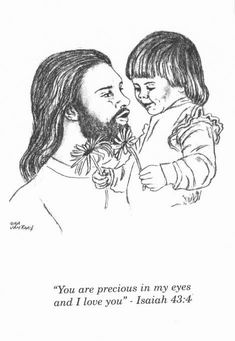
"Thank you very much," she said, and then took a small, salmon colored business card that she'd been holding in her hands and pressed it into mine. After she left, I turned it over. It was another Bible quote, Isiah 43:4. "You are precious in God's eyes..."
This gesture moved me. I may not share this woman's passion for religion, but her actions were pure. That she'd give me this small card, with no sermon or attempt at conversation, is wonderful. I felt the same way earlier this year when a woman handed me a red "Support Our Troops" wristband at a gathering for a group of soldiers en route to Iraq. I treasure these objects, because of the people who gave them to me.
Wednesday, December 20, 2006
Small But Sexy
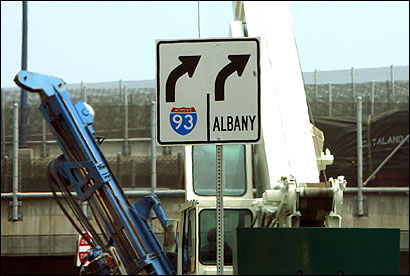 ALBANY, N.Y. - Called "Smalbany" in the current Lonely Planet (a term I've never heard used by a local) Albany gets a bad rep. The truth about New York's capital is best summarized by a transplant I spoke with at a holiday party.
"People think Albany doesn't have anything. That's wrong. Albany has one of everything," she said.
I'm reminded of a statement Berlin Mayor Klaus Wowereit said a couple years ago, that his city was "arm, aber sexy," - poor but sexy. Here in Albany, we're small but sexy.
And my party friend's right about the number of things in Smalbany. There's one good tea store, one buffalo farm, one nice Hindu temple, one controversial Guayanese club and one place to buy stinky tofu.
It's not perfect; every year the local alt-weekly Metroland complains about the city's lack of an Ethiopian restaurant. But with that Horn of Africa power busy "liberating" Somalia, that might be a good thing. There is Yonder Farms, a market less than a mile from my house with a working water-wheel and greenhouse in front, that I go years without visiting. Eating food by using bread as a utensil might be a little much for a year that has already seen the opening of several upscale clubs, lounges and even a "contemporary pub" (aka a bar with fancy appetizers).
Albany's nicest venues, the Emperor's Place serving Cantonese seafood dishes, the politico hang-out Jack's Oyster Bar and the free display of modernist and cubist sculpture at the Concourse are fantastic, they rival their counterparts in New York. The only difference is that here in Albany we only have one of them.
SmAlbany, the blog, examined the differences between New York and Albany in a post called "The "intellectual" roots of Oh, SmAlbany!"
Sample:
New York - "high paying job in the 'financial district.'"
Albany - "cushy and comfortable job with the state."
New York - thinks the "in-town" newspapers are so lame. Reads LA TIMES.
Albany - thinks the "in-town" newspapers are so lame. Reads NY POST.
I've been back in Albany two months now, and think I'm beginning to get settled in here. The other day I even thought about buying a copy of the Post.
Neo-Tanked
WASHINGTON, D.C - Inside the Party Room at Crystal Towers II were nearly 100 of America's brightest young political minds. In their simple black dresses and $50 silk ties, they seemed ready to march the five miles across the Potomac and storm Capital Hill, or at least make sure they drank the price of their tickets from the open bar.
I'd scored an invitation to this thanks to a friend who deferred his acceptance from one of the best political science schools in the country for two years to wallow in one of Washington's think tanks. He's basically a liberal (although his Facebook profile now lists his political views as "other") but is working for the American Enterprise Institute. Wikipedia describes the organization as, "a conservative think tank founded in 1943 whose stated mission is to support the foundations of freedom - limited government, private enterprise, vital cultural and political institutions, and a strong foreign policy and national defense... it has emerged as one of the leading architects of the Bush administration's public policy. More than two dozen AEI alumni have served either in a Bush administration policy post or on one of the government's many panels and commissions." Not exactly my usual party mates.
I wanted to go, if only to experience the way these young conservative people behave in leisure. It was like being invited to a rare tribal ritual or a Tibetan sky burial, fascinating because you've never seen anything like it before. But I was only going to be in Washington two days, and devoting one night to an event I only wanted to ironically attend didn't seem wise. I took a pass on buying an advance ticket.
Nine o'clock on party night, several friends and I were downstairs at the Towers, drinking wine and preparing for a fancy birthday dinner. Just before leaving, we decided to head up to the Party Room, unannounced, and check out the party. We took the elevator tot he top floor, walked down a long twisty hallway. In front of us were a bunch of smartly dressed people in front of a wonderful view of downtown Washington. This looked like any other Washington party I've seen on C-SPAN, only without the prevalence of bald spots.
The party guests resembled the crashers, although they had better haircuts and worse dance moves, but not enough to make me forget their love of free trade, FOX News and The New Republic. I walked inside, shook the hand of my friend, stole a mini-cheesecake and went back to my liberal life.
Saturday, December 09, 2006
Please Do Not Click for English
ALBANY, N.Y. - Spring language program deadlines are approaching, and I'm frantically trying to decide where to spend the next year or so of my life. The process is much like undergraduate admissions, with more Chinglish.
At Peking University's page for international students, prospective students are told the "Application Period is from November 1." Does this mean the school accepts applications beginning on the day? Or is that the deadline? What happens to application sent before then; are they thrown in the trash?
I sent an e-mail off to the school three weeks ago. I received my reply earlier this week: Nov. 1 was the deadline. I guess I won't be studying at Peking University.
(Prospective students can access this accurate information only when the site is working. Many parts of the school's English Web site seem to be frequently down.)
Beijing Normal University's Website features slick graphics and interface, but this element of sophistication is just a veneer on an application which must be printed and faxed to China. Yes, faxed.
After the application is received, the login part of the Web site stops working applicants can only "inquiry" their form. The inquiry section is blank.
Tsinghua University is the "M.I.T. of Asia," but their Web site is more the "Hudson Valley Community College of Northwest Beijing." Their incredibly slow Web site wins points for at least having clear information, but accessing the relevant parts for international students requires avoiding the two most obvious choices (both dead ends) and selecting a small menu on the bottom of the screen.
I want to be admitted to these schools, so I can learn about Beijing in-person, not through a Web site. But for now, this site is my portal to these institutions of higher learning. And what a dirty, foggy porthole it is.
Wednesday, December 06, 2006
Three-Way First Date
 ALBANY, N.Y. - I'm holed up on this chilly December evening at Professor Java's Coffeeshop, a high school hangout for the goth/poetry reading set. I'm supposed to be writing a letter to Beijing University about spring semester admission, but instead I've been listening in on a first date a couple tables over.
I particularly enjoy this story, told by the male - a self-proclaimed "easy going person" - about a previous unsuccessful dating experience.
"She was dressed basically like her mother. But she's like three years younger than us. She was just really out there. And I'm like she's totally, totally not my type. But I'm having a great time with this."
"So finally her friends get there and we have a couple drinks. We were pretty buzzed. It was like 12:30 and we left, and I knew a place on my route that was open.
"I had a good conversation, I had a good time. I mean anything above that, no way, but I had a good time."
"A couple days later, I call her up, and ask to speak with her, tell her 'hey that was fun. maybe we should have drinks again some time. But her mother picks up the phone and says she's not home."
At this, the date groans. Her new man got stood up.
"And now I feel stupid, because I totally didn't want this to be anything, and now it looks like I'm the one who's calling."
"And you're trying to be a nice guy."
"Yea."
I can only hope the same thing doesn't happen after this date.
Friday, December 01, 2006
Never Trust the Police
ALBANY, N.Y. - The FBI is laying low this Friday in Kansas, after paying $2 million to a military man wrongly accused of being involved in the 2004 Madrid Train Bombings.
Here's the lesson one Kansas.com reader - "kansas rural farmer" - takes from the affair:
"I have lost all respect for police. If you carry around $1,000 in cash, say for Xmas shopping, and you get stopped for a routine traffic violation in the "big city" of Wichita, cops will "ask" permission to search your vehicle because you're a "suspected" drug dealer for carrying that amount in cash. I like to pay cash for items. I grew up in rural Kansas and many farmers in rural Kansas like myself don't trust authorities or banks"
To which an anonymous replier adds:
"to kansas rural farmer:
i totally agree with you!"
Thursday, November 30, 2006
XXII

ALBANY, N.Y. - Today's my birthday. I thought I'd mark the occasion here by looking back at what happened 22 years ago today, as I was emerging into this great Earth.
According to Wikipedia, the day is notable because:
"The Tamil Tigers begin the purge of the Sinhalese from North and East Sri Lanka; 127 are killed."
The Nevada Board of Regents "Approved authorization to seek the changes in NRS 396.325 as reflected in Ref. K, filed with the permanent minutes, and approved the interim policy, also defined in the reference material."
The New Kingdom Metaphors were officially deactivated from the Cosmic Baseball Association.
The Dukes of Hazzard episode "Danger on the Hazzard Express" primeres. One reviewers on Amazon describes the episode as, "Boss Hogg's crooks steal the General Lee and rig it with explosives to crash the car into a train filled with gold."
And I was just 22 years away from my 22nd birthday.
Sunday, November 26, 2006
Flat Box
 ALBANY, N.Y. - What will it take to get cups and bowls back onto American hiking trails?
Utensils and silverware have been under attack in the hiking world for some time now. While Thoreau traveled to Walden Pond with a set of knives and stew pot, experts today recommend the long distance hiker travel with just a metal bowl. Minimalists eat freeze dried food and drink coffee out of the same bowl.
While the few ounces might help on day six of a week-long trek through the Rockies, it makes the trip a less uncivilized. Enter Orkiaso, the flat plastic sheets that fold into leak-proof cups, bowls and plates within a minute.
I first saw these at Eastern Mountain Sports, where I'm putting in a few extra shifts for the holidays (Holidays to Russia don't fund themselves). EMS is giving the item a large display in the campware section of the store.
This clever innovation comes not from the land of the tatami but fussy old England. Three recent university grads took spacial-visual skills and a clever marketing strategy and turned it into one of the year's hottest inventions. It's now available - according to the product's Web site - on six continents, although who exactly in Africa is begging for flat bowls for hiking trips I'm not sure.
You won't find it mentioned on their Web site, butorkiaso means "folded plastic" in Japanese, and is a form of origami. It can't be considered true origami, because the sheets used to make the items have been cut into non-square shapes. But this invention shows that the one or two days devoted to teaching American children how to make a paper sailboat (or if you're lucky enough to have a Japanese exchange student, a crane) might not be a complete waste of time.
(On the subject of Eastern folding traditions, I wanted to point out that the Russian nesting doll, or matrioshka, isn't really Russian. The first ones of these dolls-within-dolls that every person brings back from Moscow were made in 1891, as a copy of an older Japanese style. The Japanese dolls in turn evolved from Chinese Boxes, the fount of thing-inside-a-smaller-thing worldwide.)
Orkiaso is manufactured in Shenzhen, near Hong Kong. This means that it took Brits, Russians, and Japanese to modify a Chinese invention, which is now made in China and sold to Americans and Africans at inflated prices. Imperialism is not dead.
Saturday, November 25, 2006
Our Chinese Representation
ALBANY, N.Y. - Sunday's Times Union features a lengthy profile of successful Democratic candidate for Congress and my former employer Kristen Gillibrand. In it I learned a few interesting tidbits:
I feel closer to my Congress-woman elect already. Perhaps she can be my new Chinese study partner?
Saturday, November 18, 2006
A Russian Master

ALBANY, N.Y. - I'll cop to putting some unusual things on the blog this week. Poems, old articles and weird pictures. That's just the way it's going to be sometimes on here.
This morning I had tea with a Russian woman, Irina. Irina is in her middle 40s and came to our meeting in a full-length formal coat and black slacks. Her wavy hair was recently highlighted.
I wore a mint colored button down shirt with a yellow and blue band near the shoulders that said "RedEx: Redhot Express" across the front. It cost $5 at an export shop in Hong Kong.
We met at Border's Books and Music in the Albany suburb of Colonie. My father was there, and so was Irina's daughter, Tonya. Tonya, 15, is a ranked chess player, future AP student and anime fan. By coming to Albany today, she missed anime festival in New Hampshire. She made an elaborate costume for Halloween this year, a hooded warrior that took more than 20 hours of sewing between Irina and Tonya, and plans to wear it at future anime gatherings. I told her about my recent trip to an anime festival, where I saw a number of people walking the hotel event room floor with eight-foot keys from the game Kingdom Hearts.
"That's a very popular game," Tonya said. Apparently anime tastes in the Northeast aren't terribly different than in the Heartland.
Tonya and Irina live in Montpelier, the tiny capital of Vermont. (Tonya said it only has 8,000 people, Wikipedia says 8,035, which is pretty damn close.) They're originally from Moscow. I'm not sure why they came over here: I was too busy talking about anime to ask.
Irina and I met because I've recently begun planning a trip to Russia. I tentatively thinking about flying to Moscow from New York in early February, and making my way to language school in Beijing by rail. Paul Theroux, the chronicler of train journeys, has convinced me to take this long trip. Irina's never been on the long train, but she had some advice on the Moscow leg of the trip.

And best of all, Irina agreed to hook me up with an American friend living in Moscow to be a companion, guide, friend and possible host while in the city. For the price of a cup of Pomegranate Green Icea Tea, I learned quite a bit.
Thursday, November 16, 2006
The Poetry of Work
TROY, N.Y. - We've been scoring too hard. Our supervisor at the testing site told us today we're working too fast, and we might have to leave our jobs early. At my scoring table we decided to address the problem by stopping work and writing poems. Here's three:
Poem A
Last week we had stars,
shining in the sky,
Then we smelled rain,
Amanda said good-bye.
Wednesday was Earth,
saved by little kids,
And now...
we're reading poems
and I've hit the skids.
Poem B
The kid to my right is a new generation
He serves his answers with intense concentration
"A 4," he says - "No," I say, "3"
The shocked look on his face says he doesn't agree
The numbers are high
As a result, we'll lose work
My team says "Slow down!"
But it's hard for to shirk
At 20 you have all that time ahead
At 60, you're fighting a hospital bed
For you have to be fast and you have to be quick
To outrun the clock and its accelerating tick
But for my around I will slow down
So on Wednesday we'll get to come round
Another 2 - then a zero - a 4
Then drag your feet - don't do anymore.
Poem C
We're grading a question 'bout music
that's more than a little confusic...
Should the kid play the sax?
Or turn amp to the max?
Or just go and find him a floosie?
Sunday, November 12, 2006
Bump Bump Bump-ed
ORLANDO - Orlando International Airport is terrible, terrible in a faded Blade Runner-style exit signs, blueberry Pleather seats and Argyle patterned floor type-way that plagues many American airports. Departing a 757 and walking into the airport for the first time in a decade, I wasn't disappointed by this tired-looking entrance port. I knew it was coming.
I also I wasn't surprised when leaving to see the American Airlines gates (11-20) filled with thousands of harried travelers, crammed between sharp aluminum armrests, watching CNN Airport Edition replay footage of Britney Spears' Tuesday appearance on Letterman. She just got divorced, you see.
There's an announcement. "Attention passengers on American Airlines Flight 815 to Boston. This flight is overbooked and we are currently looking for a few volunteers with flexible travel arrangements to give up their seats. We are offering in compensation a $300 travel voucher and seats on a flight to Boston tomorrow morning, with a stop in Miami, arriving in Boston at 3:30. If you are interested, please come up to the service counter."
I headed toward the counter, scanning the crowd for anyone else willing to torpedo a day of work for $300. I'm traveling abroad soon, you see. I shouldn't have worried. Ten minutes after I handed over my ticket, I heard a familiar voice. "Attention passengers on American Airlines Flight 815 to Boston..."
The announcement repeated every 10 minutes. The airline pushed back the departure time by 20 minutes, although 15 minutes after take-off no one had boarded the plane. They still needed volunteers.
Time cured my sister's sense of obligation to return to Boston College for a Monday lecture. "I suppose I can miss one day of class," she said.
American Airlines doesn't really want to give you $300. They really want to sell additional seats to last-minute customers, who pay between three and 10 times more than people purchasing advance discount fares. Bumping off a few customers at $300 ensures a full, profitable flight.
The money comes with restrictions. "This is just like cash. Don't loose it," the graying attendant said to me as he handed over a ticket-sized piece of paper covered in tiny black ink. "Service Fee May Apply at Time of Redemption," the voucher warned.
I have a feeling I won't be using this $300 for anything productive. For now, I've got a free hotel room in a three-star hotel (not the Ritz, but better than some hostels from the last few months) and a first-class ticket for a flight home tomorrow. Not bad a bad haul from a terrible airport.
Friday, November 10, 2006
Porte de Elephant
BOSTON - A circuitous weekend trip means I'm back in Boston for a few hours, and I decided to see some friends I missed last week. Wanting to maximize my time, and having temporarily "misplaced" my cell phone, I sent out a mass e-mail:
"Enormous Room, 9-9:15. The Enormous Room is in Central, next to the T stop, in the same building as the Central Kitchen. It's upstairs. Look for the door with the Elephant."
Boarding the T (subway) for the restaurant, I explained to my friend Jill that I couldn't be more specific in my directions. The Enormous Room has no sign.
"I'm going to be honest, Jon," she said. "This doesn't sound like the place I'm going to like."
Me either, but the Enormous Room is probably my favorite bar in Boston. Location is a key part. It's in Central Square, a neighborhood equidistant from Harvard and MIT, which guarantees an audience of hyper-smart graduate students and young professors. They don't want dirty, dank clubs, this crowd demands funky, moderately-priced spots. Central Square provides, with venues like Boston's best performing venue, the Middle East, and a bar with a chemistry/test tube scene.
The Room flirts with the tag of pretentious hipster den. When the Enormous Room opened two years ago, it served just one dish, the Enormous Platter, which consists of "many little tastes on an enormous plate ... choose either a Moroccan spiced beef skewer, harissa chicken skewer, or a herb rubbed salmon skewer and it will be served with a variety of north African style accompaniments such as couscous & baba ganoush & picked beets & pickled turmeric cauliflower & lamb briouats & potato date briouats & marinated feta & tabouli & mixed olives & kefir sauce & harissa, etc ... etc ... creative license is involved in the platters. most things, but not always everything will appear. trust us."
The menu now has six items, but the We-Don't-Give-A-Shit vibe is still in place. Our waitress, a young woman with thick, hay bale dreads, stops over with the regularly of the hour clock. When we first arrive near the end of the dinner crowd, she advises to sit a couple of stairs and watch out for a table. She didn't plan on helping us with tables. We, of course, did decide to come through the unmarked door.
Eventually a couple of men - chemists, perhaps - leave and we inherit their place. Seating is on one of several soft mats. Most people sit Indian-style (or as my sister informs me, it is now supposed to be called "pretzel-style") lie against the wall pillows. The low-lighting, Persian style wall murals and hints of insence encourage the kinds of meaningful conversations that old friends have after a time apart.
After a round of drinks, the bar's oddities - only bottled beer, a speaker placed right next to my head - become charms. At the end of the night, the crowd's won over. They will come through the unmarked door again.
Monday, November 06, 2006
Lessons from the Home by the Airport
TROY, N.Y. - First day at a job. Awkwardness abounds.
For reasons I can't get into I was telling two younger workers a story about my travels in Iceland. Every night at the Reykjavik Youth Hostel, I would gather with six or seven other young backpackers in the living room. Every half an hour, we would put on our hats, scarves, mittens and coats and walk around to the back of the one-story building, where there was no outside light. Then we would look up.
About 15 seconds later someone would inevitably say, "It's still cloudy," and we would head back around front and back into the living. In six days, I saw no lights.
Just then, a woman of about 65, eating a cup of yogurt at the next table spoke up. "Excuse me," she said, her wrinkled lips softly speaking the words, "Did you just say you use to live in Iceland?"
"No, sorry," I said, "I just went there on a vacation."
She didn't look sad. "I used to teach there," she said.
"I worked in Keflavik," she said, pronouncing it with deep Scandinavian guttural sounds, not the warm grandmotherly voice she uses in English.
It was the early 1960's and she was right out of teaching school. An agency that provided English teachers in Europe said if she'd go to Iceland for a year, she could have her pick of assignments the year after.
"And that didn't sound like a bad idea," she said. "I thought, 'why not.'"
She lived in a tin-roofed apartment building. She spent half her time teaching blonde Icelandic children, the other half teaching American military children. Both spoke English at the same level. Icelandic is not a very useful language, so the natives spoke several other languages.
She found the Icelanders a proud but secretive people. Her window into the culture was a young university student she met, who would take her out to parties in Reykjavik on weekends. The city was small then, but the parties were legendary.
"They can outdrink anyone," she said.
There were other perks to the job. She flew free on military planes to England and Ireland during school breaks. She got to hang out on base, eating missed American foods and hearing a familiar accent. Soon enough her "hardship post" was over, and she flew to sunny Spain, where she taught for several more years.
"I'd love to go back," she said. "You don't hear too much about it. You're the first person I met that actually decided to go on a vacation there. That's very interesting."
Wednesday, November 01, 2006
Supermarket Sweeps
BOSTON – After a long, arduous journey, I have made it out of the wilderness. I went to a Trader Joe's.
Trader Joe's is a supermarket, but that's like saying brie is a type of cheese. Joe's is market with specialty foods in Coolidge Corner, a fashionable part of the Bostonian suburb of Brookline.
The cornucopia of foods available include eight Merlots, Greek style yogurt and a whole aisle of fruit leather. I heard someone ask an employee, "Where are your Thai dumplings?" (Answer: Aisle 7.) All the creature comforts are here, plus items that can make a long day at work more tolerable: heat-and-serve masala, for instance.
Every country on Earth now has a supermarket, even Taiyuan, China. I stopped into the Taiyuan store to purchase a few supplies for an overnight train to Zhengzhou in May. Taiyuan is the dry, dusty capital of China's Shanxi province. It is the third-most polluted city in the world, and is almost completely without charm. My view of the city skyline was blocked out by a dust storm. Taiyuan's supermarket matches the end-of-the-Earth feeling of the city. Partially open containers of crackers were $0.50, melted chocolates around $1. I grabbed a couple dusty plastic bottles of water and bought dinner next door at a KFC knockoff.
A week later I was back in Hong Kong, the city of Wellcome. As I've mentioned before, Wellcome is a clean, rather Western store. But the Western trapping means its shortcomings can be more apparent. There's no sharp cheddar cheese or couscous. Apples are the nuclear Granny Smith variety or include a worm. Don't even think about buying grapes. I refuse to buy seafood from any tanks that include frogs.
From Hong Kong it was on to Kansas, and the Super Wal-Mart. Wal-Mart's made large strides in its grocery business since 2000 - it now accounts for 40% of Wichita's grocery sales. Food at Wal-Marts tends to be in about a dozen aisles near the entrance. Prices are low, but there isn't the variety found in a traditional American supermarket. Forget about gourmet anything, and stock up on all the $0.30 taquitos you can eat. There's no couscous here, either.
So now I'm in Boston, happy as a pig in shit, because here's grocery store not only has couscous, but 15 varieties of it.
Saturday, October 28, 2006
Hometown Prose
ALBANY, N.Y. - One fallacy that continues to persist is that when I'm home, I'll catch up on my e-mail. Before arriving here in Albany, I imagined myself typing away at the computer, returning unanswered dispatches from March and reconnecting with lost friends. In reality, you're much more likely to receive a note from me originating in Indiana or France than Albany or Boston.
But tonight, with an extra hour due to daylight savings time, I started an e-mail to a friend in Australia, last seen in Zhengzhou. I decided to write to him because in addition to having an unanswered e-mail, I'm also reading a book that takes place in his current town of Alice Springs.
The book is "The Songlines" by Bruce Chatwin, and tells the author's quest to find the meaning of indigenous songs, and more deeply, trying to find a connection between nomadic peoples around the world. It's an ambitious, mostly non-fiction account of a lengthy visit to the area in the late 1980s. The text is fascinating, as it runs from encounters with Russian castaways and priests on the lam. The book makes me pine for a visit to Alice Springs, a desert settlement of 28,000 over a thousand miles from a major city.
I hesitated to mention this in the e-mail, as it seems too obvious. Surely my friend has heard of the travel book largely set in his hometown? A book that is taught in universities, has been awarded several prizes and is considered a masterpiece by important literary critics?
Albany has one famous work of fiction: "Ironweed." The William J. Kennedy book chronicles a down-on-his-luck man's return to his hometown during the final years of the Great Depression. I should say it apparently does, because I've never read the book. I heard of it growing up, but its setting in Albany never made me want to pick it up. I remember it now because in my travels, when people (usually educated people) find out I'm from Albany, they'll ask me if I've read "Ironweed."
So maybe The Songlines isn't being read in Alice Springs after all.
Tuesday, October 24, 2006
Marie
ALBANY, N.Y. - The "Marie Antoinette" teaser is one of the best. Kristen Dunst runs around Versailles, playing with sparklers and dashing through gardens in the pre-dawn like a teenager on prom night. The montage is set to New Order's "Age of Content," a mix of fast guitar and mournful synths which is now one of my iPod's most played songs. I loved it, and so did several of my friends.
We counted down the moments until "Marie Antoinette" opened in theaters. We cringed when we heard reports that some bbooed the film at Cannes. Roger Ebert said it was just a couple people, and the French like to boo films anyway, we said. We were a tad baffled when a second trailer was released, with more running around Versailles but this time with the god-awful Strokes in the background. We wondered when the reviews were very mixed.
Finally, we got to see the movie.
Sadly, it wasn't great. The plot wanders, and even a wonderful soundtrack of ambient and new wave music (that Strokes song excluded) can't make up for a lack of resolution. The movie's more a mood piece than anything else.
Last week in Scranton, my friend Nazy told me, "prepare to be disappointed," and I was.
If the movie didn't quite work, there were still many scenes that brought out the same feelings of young restlessness that made Sofia Coppola's last film "Lost in Translation," a touchstone for many of my friends. We identified with both the heroine and Bill Murray's character, the uncertainty of what to do with life and also the perils of what can happen if we choose incorrectly.
And that was worth the price of admission.
Friday, October 20, 2006
A Local Tabloid Worth Reading
NEW YORK - One thing I absolutely love about New York (and Madison and Chicago): The Onion in print.
Reading the stories online, without many of the graphics and local content can't compare. Long live New York.
Tuesday, October 10, 2006
Adventures in Post Industrial America
 GARY, Ind. - I'm hungry. I want lunch.
I pulled off Route 90 at this city of 100,000. The name sticks out in my mind, not for any one particular event but as a archetypal Midwestern city. I wanted a sandwich and a slice of Americana.
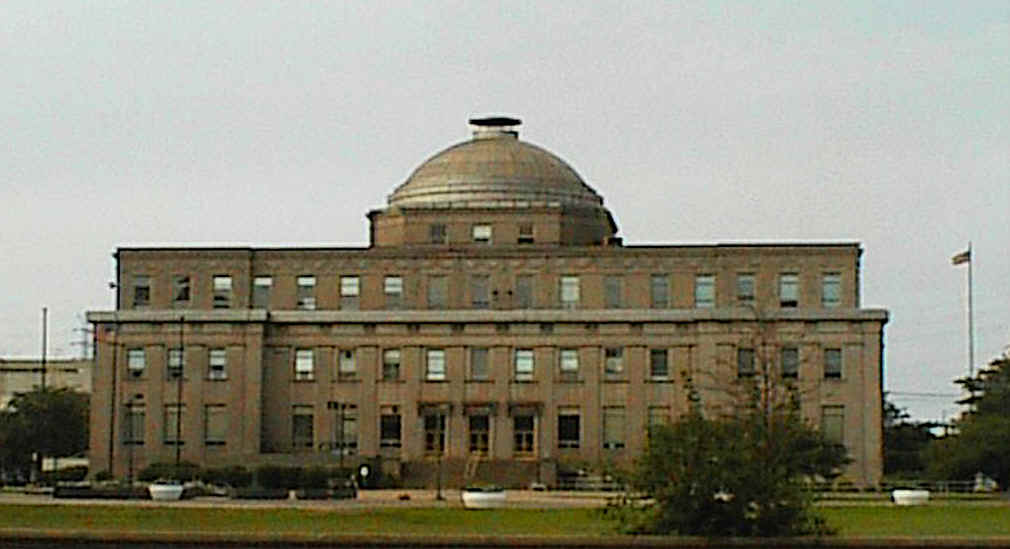
I got off at the Broadway exit, because Broadway is always at the center of the city. Turning right, city hall and the local court building were in directly ahead. They were both imposing 19th century buildings, now a dark shade of brown from age. I turned on the street next to the courthouse, incorrectly assuming it would lead to an area of restaurants and little cafés. Instead the city ended after just two blocks, replaced by a winding two-lane road and small post-war homes.
"Tammy's Ice Cream Store. Now Open." read a large sign. As I passed the building, there was a much smaller sign on the building. It said "Closed."
I came to a baseball stadium, U.S. Steel Stadium. There wasn't a game today, and the idea of cheering for a mascot as strange as steel seemed prosperous, especially at a time when commodity prices are sagging.
There were no restaurants. There were no cafes.
I saw a gas station on the right side of the road. Unleaded was $2.09 a gallon, the best I'd seen in a while. I pulled in. A homeless man walked in circles in the parking lot, glaring at people pumping gas.
"Toxic Waste Clean Up To Cost $35 Million," the local paper headline read, taking up the entire front half of the newspaper. A man in a wheelchair rolled over to the country. "I want a Butterfinger bar," he said, fishing through a plastic and Velcro wallet for $1.
I went in the bathroom. It was disgusting, a clogged toilet and a sink full of grout. When I returned, the man in the wheelchair was still asking the Butterfinger bar.
I wondered if there was any reason I should stay in this depressed steel town.
Michael Jackson is from Gary, Indiana.
I'm getting out here. Without lunch.
Monday, October 02, 2006
Drove to Chicago
CHICAGO – This blog has had two interruptions of more than a couple days since its inspection this past spring. Both times when I've reappeared it's been here.
The reason is traveling, and the stresses and illnesses that seem to come when one does it. Rest assured I'm feeling better at the moment and will be lingering my way back home. Maybe it'll take three days, maybe three weeks, but I hope either way I'll be blogging about it. 
Friday, September 22, 2006
Tube

WICHITA, Kan. – I'm glad I don't work for TV.
I'm glad I don't work for TV because I didn't have to spend 17 hours outside a home in Southwest Wichita yesterday and today. I only had to spend five, including a break for a drink.
I'm glad I don't work for TV because I don't have to do live updates all the time. I also don't have to send video back to the office, or learn how to operate a large truck. Or sometimes shoot my own video and begin editing it.
I'm glad I don't work for TV because I don't have to look good every day. When you start early, you tend to dress right before you head out the door. But in TV land, that means you could be on the air in 30 minutes. Or you might need to go live 12 hours after arriving at the office. You need to get the story, and also look good doing it. Judging back the quick shot of me on camera this afternoon, I'm ready for neither.
I'm glad I don't work for TV because I don't have to look for visuals to accompany my story. A quick photograph is enough. I don't have to worry about getting enough still shots, background images, on-camera interviews and action to fill a three minute segment.
I'm glad I don't work for TV because I can do my job anywhere. All I need is a notebook (which fits nicely in my back pocket) and a pen (two pens actually, in case the first runs dry). I don't have a "crew" or need to plug in here or there.
Television is so complicated. I'm glad I don't work there.
Related:"The Capture of Jiang Zhendong"
Thursday, September 21, 2006
Everybody Down
WICHITA, Kan. – Tornadoes can really mess up a work day.
This afternoon there was a tornado warning.
A supercell thunderstorm formed in the southern suburb of Haysville, and raced toward downtown Wichita. A police officer spotted a funnel cloud – the tight formation that immediately proceeds a touchdown – and the warning was issued.
Meanwhile at the crime desk, I was furiously typing a story about a state agent being assaulted at a smoke shop and then chasing the suspect through North Wichita. Suddenly the entire newsroom stopped working, huddled around the two small televisions and began talking tornado.
"Has it touched down yet?" "Which way is it headed?" "How long is the warning for?"
They talked, and gossiped. Meanwhile I was listening to live weather reports from the Internet, television and radio, trying to get a handle on the situation.
Then an editor came up to me and said, "If they ask you to go downstairs, don't go. Just go over there for a minute or something."
Fair enough. A crime reporter needs to stay on scene in case of an emergency, to report to the public. Even if that means going for a short ride in a tornado. I started typing away: then he was dragged for several blocks near the area of 21st and Grove....
A custodian appeared and shouted, "Everyone. Get to the basement – now!"
Most people did what they were told, shuffling down to the stairs to take shelter. I stayed back. Out of the corner my eye I caught my editor, heading down the door presumably to the basement.
So much for staying the course.
(Postscript:Obviously, the Eagle didn't get blown over by a tornado. The cell didn't even touch down. There's always next week.)
Monday, September 18, 2006
The White Elephant in the Newsroom
WICHITA, Kan. – Today marks the end of an era. Dennis Rader, the BTK Strangler, has agreed not to appeal his conviction in 10 killings during the 1970s and 1980s.
Rader is Wichita's most famous citizen – certainly more people have heard of him than Wyatt Erapp or Kristie Alley (who recently bought property here). His string of murders were terrifying. He stalked young women for weeks and then killed them in their homes. His crime spree went unsolved for years, and generations of young women here didn't know if they would be the next victim.
BTK was captured in 2004 after a dramatic reappearance. He turned out to be Rader, a respectable citizen in nearby Park City. He had a Boy Scout troop. He attended church. Many he came back because he had more time with his children finishing high school.
I knew the basic outline of the case before I arrived here. What I didn't realize was the central role the Eagle played in the drama. Many letters and notices were addressed to the Eagle.
Some of the paper's most talented writers haven't been available this summer because they're busy writing a book on BTK. Their deadline is steadily approaching – October 1 for the final manuscript – and it doesn't seem like the right to ask them to sit back and reminisce. The book, after all, will be available next spring.
Slowly though, stories have trickled out. About the time CNN gave several interviews from the desk where I now sit. The psychic who came here to film a British documentary to crack the case.
I interviewed BTK's pastor for an unrelated story about a missing dog (Don't laugh: that story ran on the front page).
BTK was the biggest story ever to come out of WIchita. It is the biggest story most people in the newsroom will ever cover. It's hard to imagine the newsroom when it was so consumed with this one giant story – terrifying and compelling in equal measure. It's not something I've ever seen in a newsroom, and it's not something I'll necessarily ever see, either. The closest I can get is the occasional stories from the people who worked the case.
When a reporter confirmed the news that Rader is not appealing, a strange mood came over the Crime & Safety section of the newsroom where I now sit.
"This is it, isn't it?" I said.
"Yes, I hope so," a reporter said. "He was a terrible, terrible person."
He still is.
Friday, September 15, 2006
A Long Midwestern Goodbye
WICHITA, Kan. – Mostly Red is beginning the transition to another geographic location. In just two weeks, I'm going to leaving wonderfully flat Kansas for the sights and sounds of my hometown of Albany, New York.
I've been regularly blogging for about five months now, and I've yet to file a dispatch from my hometown. Soon that should all change. I'm looking forward to offering my perspective on the city I know the best, sharing memories and also new experiences in the Empire State.
So don't be surprised if the next two weeks bring more reflective entries and less reactions to the day to day of my life. There are certain topics which have been on the back burner, in a pile of things that I want to cover while in Kansas. With time running out, hopefully I'll actually write about these before it's too late. And perhaps talk a little more about QuikTrip.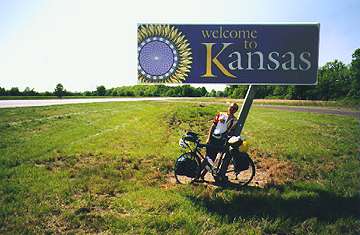
Wednesday, September 13, 2006
Great White Fair
 HUTCHINSON, Kan. – On stage was a hypnotist, doing one of those shows where he attempts to make ordinary people lose their inhibitions and cluck like a chicken in public.
"You won't believe what these people will do!" he said.
I scanned the crowd, skeptical. Could these people really let go? I'm pretty sure they could: I saw several of these acts in college. What concerned me a little bit more was the crowd at the Kansas State Fairgrounds: 600 people in this audience, and not a recognizable minority in sight.
To say the fair was very white would be an understatement. This fair could have been the site of auditions for a movie on the Third Reich.
Kansas is a diverse state these days. I spend my lunch breaks switching between authentic tortas, wonderful pho and sometimes passable Chinese food. Minority business ownership is increasing, and people are drawn to the industrial and service jobs locally. What it seems they can't be drawn to, is the state's celebration of its agricultural past.
I went to the fair on a rare day off from the newspaper (I'm scheduled to return on Saturday as part of an assignment, but things wouldn't the same on deadline), expecting to get yet another peak into Kansas life. What I found was an odd fact about the state in 2006: a state where people honor traditions, but only those with a tangible connection to these traditions.
Many of the people at the fair weren't farmers, but had a connection to the field. "My father was a farmer in Dodge City," was a common refrain. This ensures a healthy crowd – attendance was up 10% over last year – but not necessarily a diverse one. I struggled to see more than two or three minorities at the fair, with the obvious exception of Native Americans peddling crap "Western" merchandise.
To be relevant, the fair needs to step outside of its traditional audience. There needs to be more an effort to include the histories and traditions of some of the more recent arrivals to the United States. One shouldn't need to have been in Kansas for eight generations to feel welcome at this great assembly. The New York State Fair, while not perfect, has exhibits on African, Asian and Native American history and culture. There's fun, food and assembly – the same as any other fair. People welcome these exhibits and they're an important part of the audience. If the Kansas fair wants to ensure their future, they'd be wise to do the same.
Monday, September 11, 2006
How to Ace that Interview
WICHITA, Kan. – At the end of the interview, a source sometimes will say as a form of salutation, "Don't make me look bad!"
There's a paranoia that our time together was only for me to gather ammunition to earn my salary and make people look stupid. If only they knew the lengths that many other journalists and I go through in order not to embarrass people.
So far this summer I've omitted juicy but not tactful quotes from sources informing me that "all politicians are crooks," "birds are sacred creatures of nature" and more than one reference to "those Asian people." People I interview – "sources" in journalist speak – are usually nervous when I begin asking questions. Then pause, restate what they've already said, and sometimes give short responses. Then, after about five minutes, they seem to forget that I'm standing three feet from them scribbling down everything they say.
I struggle with these notes when I return to the office. Is my job as a reporter to give the objective truth – even if that means portraying someone in a less than pleasant light? I think the answer is no – most of the time. Since most people are only going to be quoted once or twice in the article, I usually go for a statement that gets at the heart of what they are trying to express. Sometimes I'll supplement that with a particularly insightful or funny comment, but rarely a rude one. People read the paper to be informed. It shouldn't be a place where they can get a few laughs because someone has no tact.
That being said, sometimes it wouldn't be ethical to not report a comment. If I was interviewing Mel Gibson and he said something anti-Semitic, that would have to go in the paper. The same with most politicians if they said something over the line. With people in public office or positions of authority, I'm much less likely to hold a comment because I believe they don't realize how their comments might be observed. These are generally skewered people, who know what they are saying when it comes out of their mouth.
The moral of this little tale is next time you're being interviewed by me or another reporter, take a deep breath before you answer each question. Trust me, I really don't want to have to make you look bad.
Sunday, September 10, 2006
Parking Lot Pimpin'
WICHITA, Kan. – For me, an ideal Saturday would be dinner at a trendy restaurant, a drink at a fun bar, a few more at a good club and then some greasy late night snack before crashing at an ungodly hour of the morning. For some people in Wichita, it's a trip to an empty piece of pavement, where they pop their hood, roll down the window and blast some music.
I live across the street (different street than the recent armed robbery) from Kansas' largest flea market. Two days a week, this lot fills halfway with people from the surrounding towns, buying cut-rate used books, jewelry and faux-folk crafts at not terribly good prices. If a strongly-accented caller to my desk a couple weeks back is to believed, they also aren't paying sales tax.
The building's day function doesn't concern me. What does is on Friday and Saturday nights, when dozens of cars return to the lot. They are teenagers mostly, although some are well into their 20s. It starts around 10, and I've seen them there at 3 or 4, when I return from a night out. They play music, sometimes shout at each other, but mostly stand around.
Their scene – I use that term loosely – is impenetrable. Even though these people are roughly my age, they way they point their cars toward each other isn't welcoming. When I pass by them on a late night drunk run to QuikTrip, they don't beckon me over with a wave. Instead they glare, wondering why I am on their piece of pavement.
Now comes news that elsewhere in town, these armies of parking lot vagrants are causing trouble. In Wichita's northeast quarter, a group of nearly 900 people assembled in the Kenmar strip mall parking lot. At around 3 a.m., someone opened fire into the crowd, getting off nearly a dozen shots before disappearing ahead of the police. No one was arrested, and police are now patrolling the area. (One of the Eagle's reporters wrote an excellent article on the situation, which appears in today's paper.)
It should come as no surprise that 1,000 people + alcohol + gang affiliations + Late Nights sometimes equals violence. But I'm not sure whether the police should take any action about the people hanging out in the flea market parking lot. Although I don't think their gatherings seem particularly exciting or welcoming, that doesn't mean they don't have the right to do it.
So parking lot people, you're welcome to your post. Maybe someday you'll find something better to do.
Friday, September 08, 2006
Dispatch from the Other Side
WICHITA, Kan. – Crime has a way of happening right around meal time.
Seconds after I walked back into the newsroom after a tasty sandwich, a call came over the scanner. People were being arrested! Near a school! Many of them! I was on my way, still digesting as I drove my car down Douglas Avenue.
I arrived. Hundreds of students were on the front lawn, playing hackey sack, soccer, chatting on cell phones and just looking aimlessly off into space. In front of the school were the cops: at least six cars, with red-and-blue lights still flashing. Inside many of the cars were teenage boys looking aimlessly into space.
These must be the suspects. These cops were the ones who did the arrests. Now all I needed was someone to tell me those very facts. I went up to a low ranking officer. She was friendly, but told me to wait over on the sidewalk. Not just the sidewalk in general but one tiny square of the sidewalk. It felt like I was the one back in high school.
Then Susan entered my square. She looked in my the eye, shook my hand, and asked me who I was. Right then I knew she was a PR person. Only PR people care about who you are at events like these, and that's because they want to control you. Susan was well put together, as PR people tend to be. In her middle 40s, with dirty blonde hair pushed by into a ponytail, her look was confident, but not too confident, a kind of casual that takes work to pull off. It exudes trust.
The policeman, who I needed to talk to, was taking his time making the statement. He seemed to be more interested in walking between each of the six police cars and seeing if anyone had snuck out. ("Nope? Better go check the first one then.") I decided to put my time on the sidewalk square to good use, and interview Susan, not about the arrests, but her career.
Do PR people make a lot of money? Well, no that much, but more than journalists.
Why'd you leave journalism? Too much time at the office, and as a TV producer, I never got to leave. We had to do all the work, got none of the credit, and still took the blame.
Is PR easy? I still work long hours. This arrest is killing me. I'm going to have to come tomorrow to finish this (On Saturday really? Yes - really.) But we get spring break off every year. That's nice.
Should I stay in journalism?
Before she could answer that one, the officer came over and answered my questions about the crime. Or he told me that yes, those were people that were arrested, and that yes, they were arrested by police officers. And I went back to the office, mostly digested and definitely not a PR person.
Thursday, September 07, 2006
A Kansas Life

WICHITA, Kan. – How long have you been here in Kansas? How long have you worked at the paper?
I get asked these questions all the time. When you inquire for a living, people will turn the tables quite frequently. At the beginning, I was cagey about the answer. After all, I didn't want everyone knowing that it was only my third or 14th day on the job. By now, I've gotten to the point where the answer isn't completely embarrassing. Two months or ten weeks doesn't sound half bad. People assume I at least know where the copy machine is by now (although I can't get it to work more than half the time).
I've come to a point now where the idea that I can only live in Blue States or large coastal communities doesn't make much sense. There are places here I'm quite familiar with. The taco stand where I grab a torta pastol. The bar where I get a Wheat Boulevard. All of the QuikTrips where I purchase a variety of strange soda mixes, paid with a credit card. I've been to these places enough times to feel comfortable; like they are touchstones of my daily life.
The same is true with my apartment. It may be dirty, permanently smoky and have walls that let know exactly what my neighbor is viewing on T.V., but the other day I caught myself referring to it in conversation as "home." It was a pretty scary thought, but two months does seem enough time to put down roots. There's a reporter who joined the paper two weeks ago. She seems pretty settled now, already telling funny vignettes about run-ins with strange sources. Maybe I've been here that long, too.
The train of thought is dangerous, because it leads to more questions: Why do I live in such a dump? Why is there frequently violent crime in my neighborhood? I went to college so I could live here - I know people in Albany who didn't graduate high school living in better places.
Finding answers to these questions requires breaking the little illusion I've sometimes fostered in the last few weeks: Wichita isn't really home. In fact, it won't be terribly long before I break out of here. Perhaps the reason that I haven't put down roots in the ways the new reporter at the paper has is that I know that my ticket out of here is visibly on the horizon. I'm not in countdown mode yet, but there's no point in calling myself a Kansan when it's almost time to pack my bags.
The Phone Call I Had To Make
WICHITA, Kan. – Being a journalist means doing uncomfortable things.
We have to stand around as a criminal comes out of a courtroom, badgering him with questions when all he or she wants to do is see their family. We have to rush to the scene of a crime, hoping to see someone arrested. We also will stand outside an event, seeing if anything goes wrong.
Our obligation to cover the news means that we have to do these things, but as a journalist, I can tell you that there are plenty of other things that I'd rather be doing. Like drinking a beer.
Today I had to do something very unpleasant. I was covering a big story. A man murdered his girlfriend and a friend before shooting himself while the police looked on. It was incredibly graphic. I'm glad I didn't see any of the pictures the police took on the scene. It was definitely the most graphic crime that's happened here for months.
I spent the first few hours gathering information from the police. Then I turned to the extensive criminal history of the now deceased criminal. It was very large, including 46 violations inside jail. The next thing to do was talk to the other people involved. While a colleague when to the scene of the crime, I got out the phone book. I wanted to speak to the victim's families, to see if they knew anything.
This is an incredibly painful time for the families. They just found out their young children were unexpectedly murdered. I really, really, really didn't want to bother them, but I would be derelict in my duties if I did not. I picked up the phone and dialed. On the third ring, a woman answered. She wouldn't give her name, only idenifying herself as a family member. I'm pretty sure it was the young woman's mother.
"I think the media knows more about it than we do at this point."
A pause.
"We saw her... off-and-on."
Another pause.
"Her family loved her very much. And I think that's about the extent of our comment."
And then she hung up.
I thanked her and said I was sorry for her loss. I really was.
Saturday, September 02, 2006
The Woes of September
WICHITA, Kan. – My last month here in Kansas began with three unpleasant surprises, all related to the calendar and all happening on the first of the month (I was too distressed to write about them yesterday, hence this entry's appearance on the second).
I have my pleasures and vices here in Wichita, the main one being fountain drinks from QuikTrip. I might have been somewhat skeptical about the place several weeks ago, but I've grown to love it. I don't take coffee breaks from work, I take QuikTrip runs. There I grab some concoction made of soda, syrup and frozen drinks and bring it to the counter. Friday, around 11 a.m., I did just that.
"That will be 85 cents," the clerk said. I was confused. I go to QuikTrip a lot. My debit card account is three-quarters under a dollar purchases from QuikTrip. A 32 ounce soda costs 63 cents with tax. I looked over the price wall for confirmation. But there, I saw that the "59 cents" sticker had been removed from the 32 oz. sign. Instead a plain-looking 79 cents was revealed behind it.
The answers came back at the office: QuikTrip lowers the price of its 32 oz. drinks during the summer. And apparently Sept. 1 is the corporate-designated end of the summer.
I came home from work, looking to celebrate the end of a long week with a beer and some "Entourage." I turn on the television, only to find Channel 15 full of static. Channel 16, Cinemax, was also dead. Then I remembered a tiny strip of paper posted on my door a couple weeks ago: "We can no longer offer HBO service. Starting September 1, you will have to make outside arrangements for the channel." And come September 1, it was gone.
I went to the gym to cool off and get rid of some of those QuikTrip calories. After I returned, I finally opened that beer and decided to read a bit. Not in the mood for the latest Paul Theroux book, I cruised over to the Economist Web site. I love the Economist. It's international, serious, funny and a great read. It also costs more than $150 a year, so I can't afford the print edition. I access it through a proxy server at my old school. I enter in my PIN number, nine magic digits that were all-important for four years, and access is granted.
But there's a problem. "That PIN is invalid."
I guess Tufts believes September 1 is far enough after graduation to close the knowledge spicket. I eventually did manage to get on the Web site, but was not happy.
That was my first day in September. I certainly hope better things are coming for the rest of the month. After all, aren't months supposed to taketh and giveth in equal measure?
Friday, September 01, 2006
Miss Penny Xu
WICHITA, Kan. – Rumor has it China is everywhere. You could tell that to the Kansans, but I'm not sure they'd believe you.
Two months on here in America's Heartland, I've had surprisingly few China-related adventures. I haven't written about the country, or any Chinese-Americans in my stories. I really haven't been in any situations where speaking Chinese could remotely be considered helpful. And so, the China has dried up from this blog.
This afternoon, I saw an interesting link while trolling the Web for a potential story: "2006 Wranglers China Tour."
The Prairie Rose Wranglers are a Kansas institution, a performance group comprised of mostly teenaged singers. They perform traditional Western ballads and songs, at a dinner theater 10 miles outside of Wichita. The Prairie Rose singers and unlimited BBQ cost $25, or $22.50 for groups of 10 or more.
They've entertained tens of thousands of people over the past couple decades, although probably not too Chinese. An entertainment agency set out to change that, and took the group over to China last spring. They came, they saw, they sang their tunes in Beijing, Shanghai and Xi'an, and left.
From the coverage in the paper and other local media, you'd think these were the first white people to ever set foot in China.
"I'm the luckiest kid in the whole world," an 11-year-old told our paper. Another child said he was worried about eating two weeks of only Chinese food.
I took issue with a couple things:
1. They claim to be giving the first musical performance on the Great Wall. They could have given the first musical performance of the Great Wall... on the day. But, no, many a people have performed on those steps. Even I sang "Hollaback Girl" on the wall.
2. Their motivation is apparently to meet "the Chinese people." I'm skeptical. Who are you meeting as you zoom through the country in a giant tour with no Chinese?
The whole trip seemed like a giant missed opportunity. Why were these guys stuck in the boring big cities? Why didn't they go to see China's real-life cowboys? Now a joint performance of a Tibetan chanting and doo-wop songs about "Missy Penny Sue' is something I'd pay 25 RMB to see. I might even pay $25, if it included some BBQ.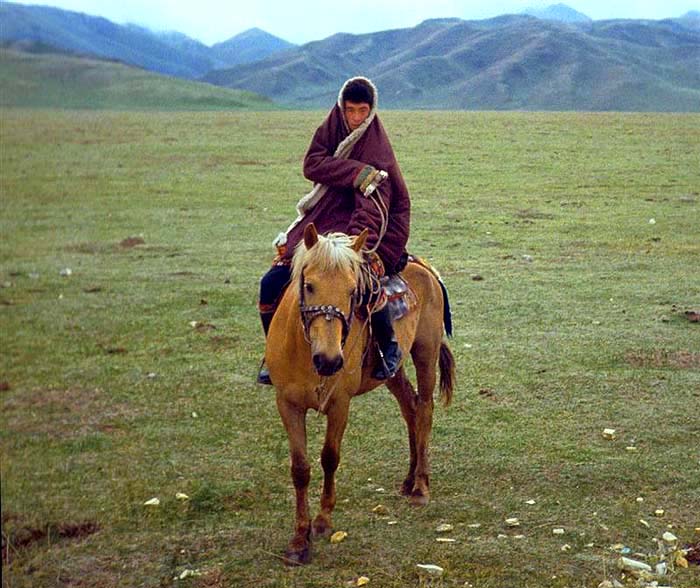
Tuesday, August 29, 2006
A Brave Blog
WICHITA, Kan. – In my last post, I rather ridiculously admonished a 91-year-old woman for straying from her mother's story in her self-published biography. That might have been slightly tasteless. Today, perhaps as a form of redemption, I wanted to highlight a piece of a writing that's completely serious and incredibly brave.
Tamara is a local woman, probably in her 30s. She's been through some hard times. A decade ago, she was addicted to cocaine for a period. But she cleaned herself up, and married a by-all-accounts decent man. They live in Wichita.
A few months ago, Tamara started throwing up frequently. She couldn't keep anything down, including her anxiety and depression medications. She become jittery, nauseous. Her husband took her to a doctor, who referred her to a specialist. She saw doctor after doctor. Tamara wasn't getting any better. By July, she was having trouble breathing. She was admitted to the hospital.
Doctors continued to examine her. For a while, they thought it was a case of pneumonia. But she kept getting worse. She needed a breathing tube, and later a feeding tube. She wasn't responding well, so she had to be restrained and sedated. Then, the doctors came back with the final diagnosis: advanced cancer. Her doctors believe she has months to live.
I've never met Tamara. I know what I do about her because of her husband, Josh. He's transformed his blog, "I Got The Poison", (a line from a Jason Mraz song) into a log of Tamara's illness. He's been incredibly faithful in updating it. His entries have only gotten more frequent in the last couple weeks, as Tamara has been in and out of the hospital.
I don't want to say much more about it. The journal is online, and deserves to be read. My interpretations of it, what it means, why it might exist and how it helps are all beyond the point. What matters is that this journal exists and makes for sobering reading on the often-frivolous Information Superhighway.
Go here to read it.
Saturday, August 26, 2006
Propelled
WICHITA, Kan. – Long before the Chunnel made it simple, Ken Paxton went to Europe daily.
His method of transport: the B-17 bomber, a medium range plane from World War II. He navigated, making sure the plane reached one of the 2,000 daily targets the Allies bombed in 1944.
The planes ran out of North Albion, which quite close to London. I made my way through there during a visit last winter, on the way up to Oxford.
Today it's uninteresting suburbs, but during the war it was a valuable airfield. Paxton was one of thousands of Americans who operated out of the site.
I met him at another air base, one that's much less strategically important. Jabara Municipal Airport isn't even Wichita's most important airport: that would be the wonderfully named Mid-Continent International Airport. There's also a major air force base here, McConnell. No, Jabara mostly is a place for rich corporate types to launch their private jets without having to deal with McConnell security.
This weekend, though, it's hosting the Wichita Flight Festival.
I interviewed young families, children, and people with lawn chairs. The Melting Pot of America was on display. I attempted talk with three Asian people who couldn't speak conversational English. (This is an anomaly. Most of the time Asian-Americans, and Latinos and other immigrants here have been excellent interview subjects.)
Mr. Paxton thought the festival was pretty damn good, he said as he watched three plane fly upside down in formations from the shadow of an airplane hangar. Did he ever do stunts like that in the B-17?
"No, no, no," he said, chuckling. He was in the business of straight-up flying.
Wednesday, August 23, 2006
The Sound of a Gun
WICHITA, Kan. -- Until 24 hours ago, I'd never heard the sound of bullets leaving a handgun.
I've lived a pretty sheltered life. The places I've lived, Boston, Albany and Hong Kong, primarily, are all pretty safe, especially in the areas of town that I was living in. Wichita, as I've written before, is different.
Yesterday I had a wonderful evening out in Wichita. There's a local bar that screens old movies outside in the summer, so some colleagues and I went over after work for a couple drinks and Cat on a Hot Tin Roof. I returned slightly after midnight, and was typing a quick entry for this blog when I heard a loud bang. It came from the north, but sounded really close and echoed. Closely behind that first noise were four more.
I hit the deck - or at least jumped off the couch and onto the floor. My apartment's small, and there's precious few places to hide. I wished for a hidden annex and/or a root cellar. But I had none. I wasn't sure what the noises were, but it didn't sound terribly good.
I grabbed my handy book -- still reading Paul Theroux, by the way -- and spent 20 minutes on the floor, nervously reading about Welsh trains. Then I decided that since I was due at work before 7 the next day, it was time to go to bed. After all that excitement, I fell asleep quite easily, until ---
KNOCK KNOCK KNOCK KNOCK KNOCK KNOCK
My first thought was that I'd overslept, and that my editors were banging on the door for me to come into work. (I'd just woken up, go with me.) I stumbled over to the door, my now rather long hair standing several inches into the air and squinting without my glasses. The man introduced himself as a Wichita police officer, I was far too tired to remember his name.
He wanted to know if I saw anything that evening.
"I heard some shots, just after midnight. But I didn't see anything.'
He didn't say anything.
"By the way officer, what happened?"
Turns out there was a drive-by right across the way, on a little street that runs past my side of the apartment complex. The home was literally across the street, not more than 60 feet from where I'm typing this now. There were flashing lights when I peered out the door. The officer said no one was hurt, took my name and phone number for possible follow up, and woke up Oscar next door.
One of the blessings and curses of being the sometime police reporter here at the Eagle is that I get to find out exactly what happened in incidents like these. The story as it stands now is that there were two shootings last night, both gang-related. The second shooting -- the one by my house -- was actually a walk-by shooting, and no one was hurt, thankfully. But teenagers are in the hospital for a related incident uptown.
I know this stuff happens in Albany and Boston and Hong Kong, but I managed to live 21 years without seeing it. Now I've been here two months and been involved with two violent crimes.
So, do I feel safe and sound in the Heartland? Not likely.
Monday, August 21, 2006
Dirty Reading
 WICHITA, Kan. - A journalist does not eat well. The long hours, constant deadlines and high levels of stress mean that I subsist these days on high amounts of sugar and caffeine. It's not surprising that I spend a fair amount of time in the office bathroom.
For whatever reason, I'm usually in the bathroom mid-morning. I close the door to one of the two stalls, and take a seat. This is one of the few times during the day when I have five to seven minutes to kill without a chance of a phone ringing, an editor wanting a quick meeting or being called out to a chemical spill. I can just "be."
I'm a Type-A personality, though, so I need to do something. When I look around the stall most days, I see the same thing: a section of the newspaper. Invetiably, I pick up this folded piece of paper to see one thing: it's the sports section. I hate the sports section. Why does it always have to be in the bathroom? Do people really not have time in during the course of their day to check the box scores or see about the latest trades? Why is this considered necessary reading?
The sports section in the men's bathroom is such a cliché. It was the same at my last two papers. Sports is ever-present, although in Scranton at least the business section would pop up from time to time. Here it's 99 percent sports. Why are men enforcing gender stereotypes? If I could check the women's bathroom, would I find teh features section? Or perhaps most women secretly admire sports, but hide their interest by reading in the bathroom?
I've been fighting this trend by bringing my own reading material into the bathroom, the obituaries. Mid bowel movement is the only time I can remotely justify reading these things. They're not going to produce any article ideas, and I'm sure not going to get any interesting stories to tell my friends. But I find it nice to sit back and look at lives well lived and ponder my own mortality for a few minutes each day.
That's what I call taking care of business.
Sunday, August 20, 2006
A Walk Around the Block
WICHITA, Kan. - I can't walk anywhere here in Kansas.
This evening, after a large meal of pasta, sausage and garlic bread, I felt like taking a stroll. "Helping digestion," is what my parents would call it. Many evenings they take a two or three mile jaunt after the dinner; I wanted to do the same tonight.
But where to go? To the north of my small apartment complex is a gold-plated car wash and a string of abandoned lots. Half a mile that way there's a train crossing, and this time of night there's a chance of a 20-minute train will be creeping by.
To the east is a Sonic, a drive-in-but-not-thru restaurant, and a number of homes with weeds coming through the driveway and scary teenaged men sitting in the driveways.
To the west is an industrial park. The business I'm most familiar with there is the gun range, where I went for an article a couple weeks ago. I'm not sure if I'd want to run into the clientèle there off-work.
The south of my apartment is the most strange, because it's the site of a large, mostly empty strip mall. The highlight there is Micol & Janets, a local bar where Micol leads the house band and six to eight pickup trucks are parked outside every night after 11 p.m. There's also a strip club.
You might gather from this last paragraph that I don't live in a particularly good part of Wichita. It's scruffy, working class and there's a fair amount of crime. People on the street next door were setting off fireworks well into August. There's been a shooting, a couple stabbings and robberies just in the time that I've been here. It's not necessarily the place where I want to be loafing around after dark.
Just the act of walking seems to be a slap in the face here in Wichita. The districts are spread out, with very little public transportation linking them. There isn't a bus on Sundays. The 11th Commandment here might as well be "Thou shalt own a car, so thou can drive thouself to church."
One incident confirms this city's love of cars more than anything else. A couple weeks ago, I was out with some friends on a Saturday night at a bar. I wasn't driving, so I had a few beers. We came home around 2 a.m., courtesy of a friend who volunteered to be the designated driver.
Safely inside my apartment, I decided that I couldn't sleep quite yet. I wanted a snack, so I headed across the street to QuikTrip. I went on foot, not only because the nearest location is across the street, but because I was a little tipsy. I bought a bag of Doritos, and was just finishing crossing the street back to my house when a couple of men in a large SUV came roaring down the other side of the road.
"Get a car, you faggot!" they screamed, and then headed on down the street.
Tonight I'm driving to the gym, where I'll walk on the treadmill.
Saturday, August 19, 2006
Will You Buy Me a Drink, Carry Nation?

MEDICINE LODGE, Kan. -- From the top of the grassy mound, I could see no evidence of man. No power lines, no farms, no cities or even a cell phone tower. Just hundreds, maybe thousands of identical looking hills, rising a couple hundred feet off the prairie floor, a few low scrub trees and a threatening sky, sealing off Big Sky country.
I felt alone, more definitively in the wilderness than I thought possible in Kansas. It was like Wales, only more gloomy and more forlorn.
My two companions were Ryan, with a day off from his ambulance job, and Jean, in town from Quebec City. The first Quebecois to come to these hills? Maybe.
Why we climbed this hill, and not the dozens of others we passed since leaving Medicine Lodge, I'm not sure. But it wasn't until we abandoned my Toyota Corolla and hiked up the mound that I realized how far from civilization we had come. I wondered if we'd ventured too far. I suggested we head back to the car. We had no map, and it was already 5 p.m. On this gloomy day, that meant not more than two hours until nightfall.
Back at the car, I looked at the gas gauge. One-quarter full. I wondered if we'd be spending the night in these hills.  On a map, Medicine Lodge is about 75 miles from Wichita, an hour's drive. In practice it takes well over two, because of the paucity of roads in rural Kansas. We wound south, then west, then south and finally back to the east before reaching Medicine Lodge.
I wanted to see Indians. Medicine Lodge is where in 1867 20,000 Indians from five tribes signed a major peace treaty with the government, an important part of our nation's history of unequal agreements with these peoples. Coming into town, several large billboards advertised triannual campout where people would reenact the signing. Unfortunately it wasn't for a few more weeks.
The only pioneer relics in town were a few rusted out cart frames, parked next to the town's little league field.
We needed an activity for the day, so we decided to walk up and down the town's mostly vacant Main Street for ideas. At the grocery store - where the Wichita Eagle is sold, proudly displaying the lead article written by me - an older man suggested a drive in the hills. At a nearby gas station, a woman suggested the "Scenic Drive," a road that left the main highway just outside of town.
"People seem to like it," she said, and shrugged.
The road began by ascending a small hill, using wide curves to avoid steep inclines. The view slowly came into focus. We weren't terribly far from Wichita, but it seemed as if we'd crossed some invisible border that separated the High Plains from the West. The soil was now rust colored, and the grasses were spiky and short, not reaching three inches off the ground. I'd last seen this scenery in Colorado. After six miles, the scenic road turned to dirt. On the way to Medicine Lodge we ran into a downpour so heavy that I had to pull over and wait for 15 minutes until it moderated. Water pools were scattered over the road. I have been on wet dirt roads before here in Kansas, with messy results. Egged on by my passengers, I turned on the road anyway.
The journey was wild. Wheels gripped the road one second and then slid off at a 45 degree angle the next. I had to keep the car in second gear, furiously pressing the gas petal and pulling the steering wheel to keep the car on the road.
The road went on and on and on. Ten miles became 20, then 30 and 40. We passed a couple cattle fences, but saw no one. There were no car tracks, and the route wasn't on the Kansas AAA map I had in the car.
We drove through the twilight. Right before I needed to turn on my lights, we reached the highway. I was thrilled. I wrote my name in Chinese on the inch-thick mud on the side of the car, took pictures and cleaned off my sandals. We had returned.
Note: This is the second of three entries on my recent travels outside of Wichita. They'll be posted between current musings on Kansas' largest city.
Little Harajuku

WICHITA, Kan. -- I scanned the crowd at the dimly-lit Best Western Wichita North auditorium. I saw one fat Mario, complete with an "M" hat, two Chun Lis from the Street Fighter series and three Soras from the Kingdom Hearts games. And there were 100 other people in costume, representing animes that I had never of.
I wanted to ask the attendees of the second annual Wichita Anime Festival one question: "What the fuck are you doing here?" But since that wouldn't be terribly tactful, I settled on this: "How did you make your costume?" The responses were the same.
"I've been waiting a long time for this," a 21-year-old man told me. He had on a costume that resembled the Disney representation of Robin Hood. He was actually Link, the hero of the Zelda games. He wore rubber boots covered with layers of white duct tape, a green cape made out of a sheet, held together with political buttons painted yellow.
How long had he been waiting? "Since January, when I got my ticket," he said.
To get to Wichita, he drove four hours with a friend from western Kansas. This event, attended by nearly 2,000 people, is the largest anime festival in the state.
"I've got about 60 hours in this costume," a 19-year-old art student from Kansas City said. She was a character from Kingdom Hearts II, a collaboration between anime video makers and Disney. Her costume was based on a character from Tron, the pioneering computer animation movie from 25 years ago. She used black car foam to make the curved costume, and took four coats of paint to put blue strips across the sides. Her keyblade -- a six-foot key that is used in the game like a sword -- apparently was wood, PVC piping and a lot of time with a saw.
This was her fourth festival, making her a veteran. At the festival people kept interrupting our interview so they could take snapshots. I've loved this line -- also in my story -- most of all:
"Sorry -- I'm popular."
Most of the attendees were in high school, dropped off by their parents and wearing costumes that their parents probably made.
What struck me most about the festival was that it wasn't about Japan at all. Or even about Japanese animation. What really drew these children together was a chance to dress up in crazy costumes and act out for a couple days. High school, I'm sure I don't need to remind anyone, can be a tough time, where being cute, popular and armed with the J. Crew spring collection is mandatory. Here, mostly smart and talented children get to be the ones on display for a change, rather than having to do the bidding of the cool kids.
"Anime conventions are the sci-fi conventions of this millennium," the organizer told me. I have to agree. If the art in display was noh theater or Amazonian rainmakers, I doubt the kids would have come out. But this is a group with fans all around the country, fans that want to meet each other and know they're not alone. I see this at indie concerts I attend. (You like Prefuse 73? No way! I do too!) Anime's the subgroup for this generation.
Lesson learned, I left the Anime Festival before the odor from many rounds of Dance, Dance Revolution and poorly ventilated plastic costumes became too much to bear.
Friday, August 18, 2006
On Police
WICHITA, Kan. - A policeman is one of those professions, like being an astronaut or a race car driver, that fascinates children of a certain age. Ask a few 6-year-olds what she or he wants to be when he grows up, and an assortment of professions that deal with high-tech gadgets, frequent danger or swashbuckling will come up.
I don't know any astronauts or race car drivers. But I do know cops. I spent the better part of 40 hours this week with them, stumbling my way through a week on the police beat.I covered a runaway truck, a domestic violence beating, pickle juice damaging a car and a shooting. It was a pretty normal week.
Police talk to media more than any other profession, even politicians. Therefore police departments need to have specific protocols for handling the media. Here in Wichita, that means a daily briefing, held in the monolithic police headquarters downtown. From a dull conference room, a captain reads the most important items off of a dispatch known as the Interwatch. He takes questions and then repeats the most important cases for radio and television cameras. As he's talking, sheets are passed around with arrests and reported incidents in the past 24 hours. Reporters furiously scribble down cases that they believe are interesting, the vast majority of which will prove irrelevant later in the day.
The briefings are generally light. One captain makes self-deprecating jokes about his lack of hair, another allows himself to be taunted for not wearing a bulletproof vest.
One heavily pregnant reporter gives daily updates on her hopefully-soon-to-be born child. A few minutes before a 3 p.m. briefing today, she cracked this joke:
"The date is the 31st, but my husband thinks it's coming today," she said. "At three o'clock."
The chief of police smiled, and then read from a statement about how one of his officers beat up his own mother while trying to destroy his apartment.
That's the thing that bugs me. No matter how many awkward jokes they make or times they allow me to peek a couple feet over the line, I can't be convinced that I should let my guard down around cops. These are people who control one of the really "cool" gadgets that children like: the law.
Wednesday I was interviewing a witness to that runaway truck. The poor man watched as a 15-foot rig slammed into the side of his sister-in-law's shiny red Mustang. I left, but forgot to ask him the rather obvious question of whether the back of the cab was attached. I stopped the car across from the Mustang on the narrow street.
Then an officer came up from a nearby van.
"What do you think you're doing?" he said to me. "You stay like that and I'm going to have to write you a ticket."
My wheels were facing the wrong direction, he said. This offense carries a $120 fine -- three days pay to a minimum wage worker.
He didn't write me a ticket, but he could have. There are enough laws that cops can almost always find a reason to charge people. I have to wonder what someone did to get a charge of "disturbing the peace" or "asking for money." Surely dozens of people do these things each day without getting arrested. Who does is solely up to the man in the uniform. He may come armed with a few jokes these days, and make cameos in elementary school classrooms, but he can still put me away for a long, long time.


